Why Your Boardroom Armor Might Be Sabotaging Your Career (And What to Wear Instead)

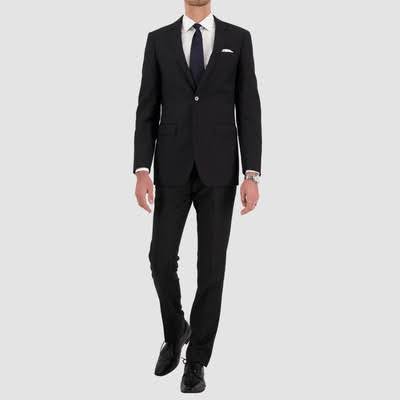
Walk into any corporate headquarters during rush hour and you’ll witness a sea of identical dark suits streaming through revolving doors. The uniform is so predictable that you could set your watch by it: navy or charcoal, conservative cut, minimal personality. For decades, this has been the default setting for professional men, the invisible armor that promises safety in conformity. But what if this very armor is holding you back?
The Conformity Trap Nobody Talks About
The traditional approach to suits for men in corporate environments operates on a simple principle: blend in, don’t stand out, and let your work speak for itself. It’s advice that’s been passed down through generations, from father to son, from mentor to protégé. The logic seems sound. Why risk making waves with your wardrobe when your quarterly reports should be doing the talking?
Here’s the uncomfortable truth: in an era where companies claim to value innovation, creativity, and fresh thinking, showing up in the exact same outfit as everyone else sends a contradictory message. You’re essentially declaring your membership in the status quo before you’ve opened your mouth. The very act of dressing to disappear can make you disappear, especially when promotions and opportunities depend on being memorable.
When Playing It Safe Becomes Risky
Consider what happens during leadership discussions. Decision-makers are sorting through mental files of dozens or hundreds of employees, trying to identify who should lead the new initiative or take on the high-visibility project. Memory is a visual medium. The person who registers as “another guy in a navy suit” faces a significant disadvantage against someone who’s created a distinctive professional presence.
This isn’t about wearing a lime green blazer to a budget meeting or showing up in sneakers when the dress code clearly requires formal footwear. It’s about understanding that extreme conservatism in dress can signal extreme conservatism in thinking. When you’ve eliminated every trace of personality from your appearance, you’ve also eliminated one of the most immediate tools for communicating who you are and what you bring to the table.
The data on first impressions consistently shows that people form judgments within seconds of meeting someone. Your clothing is part of that critical first chapter of your professional story. When that chapter reads exactly like everyone else’s, you’ve missed an opportunity to establish yourself as someone distinct, someone worth remembering.
The Strategic Alternative
The solution isn’t to abandon professional standards or dress like you’re attending a gallery opening when you’re heading to a merger discussion. It’s about making calculated choices that maintain credibility while creating distinction. This requires understanding the difference between appropriate and invisible.
Start with texture. Two men could both wear charcoal suits, but one chooses a subtle windowpane pattern or a fabric with visual interest, while the other opts for flat worsted wool. Both are professional, but only one is memorable. The texture creates visual distinction without compromising formality. It’s a way of saying you pay attention to details, that you think beyond the obvious choice.
Color presents another opportunity for strategic differentiation. The knee-jerk reaction is to stick with navy and charcoal because they’re “safe.” But professional doesn’t mean monochromatic. A well-cut suit in tobacco brown, deep olive, or even a muted burgundy maintains complete appropriateness while setting you apart. These colors work particularly well in industries that aren’t finance or law, where the tolerance for variation runs slightly higher.
The Context Calibration
Understanding your environment is crucial. A tech startup has different expectations than a law firm. A creative agency operates under different rules than an accounting practice. The key is to identify where your industry sits on the spectrum and then position yourself slightly ahead of the median, not dramatically beyond it.
If your office skews heavily conservative, this might mean introducing a patterned tie instead of solid colors, or choosing a suit with a more contemporary cut rather than the boxy traditional fit. If your environment already embraces some flexibility, you might explore bolder colors or more adventurous fabric choices. The goal is to push boundaries without breaking them, to be notable without being notorious.
Beyond the Suit Itself
The conversation extends beyond the jacket and trousers. Accessories offer perhaps the safest avenue for differentiation. A distinctive watch, quality leather goods, or thoughtfully chosen cufflinks create personality without requiring a complete wardrobe overhaul. These details signal that you’re someone who considers the complete picture, who understands that excellence resides in the specifics.
Footwear deserves special attention. Shoes might seem like a minor detail, but they’re one of the few elements people consistently notice. Moving beyond basic black oxfords to include monk straps, quality loafers, or well-maintained brown leather options demonstrates range and sophistication. It’s a subtle signal that you’re comfortable moving beyond the defaults.
The Confidence Factor
Perhaps the most significant advantage of developing a more distinctive professional style is internal rather than external. When you’ve thoughtfully constructed how you present yourself, when you’ve moved beyond simply grabbing whatever’s hanging in the closet, you carry yourself differently. There’s a quiet confidence that comes from knowing you’ve made intentional choices rather than defaulting to the path of least resistance.
This confidence translates into how you interact in meetings, how you present ideas, how you navigate office dynamics. You’re not worried about being called out for inappropriate dress because you’ve stayed well within professional bounds. But you’re also not fading into the background, becoming just another forgettable face in the conference room.
Making the Shift
Transforming your professional wardrobe doesn’t require discarding everything you own and starting from scratch. Begin with one or two pieces that feel like a natural extension of your current style but with elevated interest. Pay attention to how people respond. Notice whether you’re more frequently included in conversations, whether your opinions carry additional weight.
The goal isn’t to become a fashion statement. It’s to ensure that your professional presentation serves your ambitions rather than hindering them. Your boardroom armor should protect you while revealing who you are, not bury you in anonymity. The question isn’t whether you can afford to stand out slightly. It’s whether you can afford not to.


