
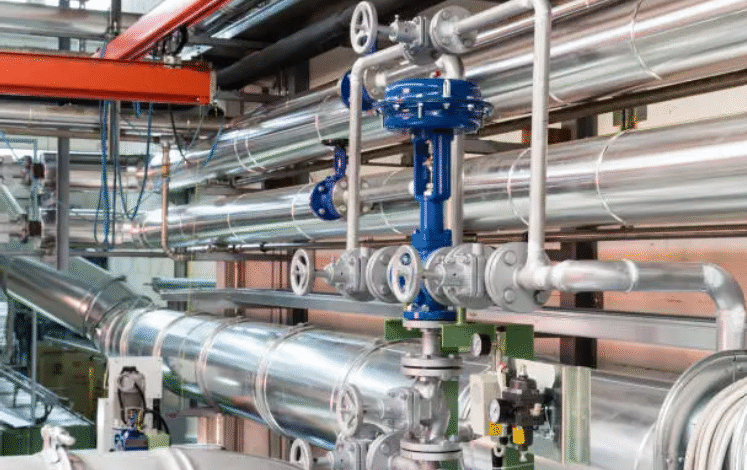
As industrial automation grows more sophisticated, efficiency, precision, and reliability in a process system have become the cornerstone of success in the industry. Pneumatic systems have become a key technology needed to attain those targets. For B2B companies, the adoption of pneumatic systems of high quality is a decision that goes well beyond the operational level; it is a decision that will improve productivity, minimize downtime, and optimize the entire manufacturing process. Top tier suppliers such as Omchele provide pneumatic valves and parts tailored to industrial application, allowing companies to achieve seamless productivity with minimal operational hazards.
Understanding Pneumatic Systems
A pneumatic system is a mechanical system that works with compressed air to transmit energy and perform work. Apart from hydraulic systems that work with liquids, Pneumatic systems work with air pressure, making them a more sanitary, faster, and safer system in a majority of industrial environments. Fundamentally, a pneumatic system will convert compressed air to motion in a mechanical form with precision and consistency to power tools, actuators and machines.
Pneumatic systems have numerous advantages over electric or hydraulic systems solutions for B2B companies. From assembly lines to intricate robotic functions, their flexibility, scalability, and low cost make them applicable for multiple industrial processes. In addition, it is well known that pneumatic systems offer the ability to produce repeatable and consistent motion, which is critical in the controlling of waste and quality in manufacturing.
Key Components of Pneumatic Systems
B2B companies need to understand the key components of pneumatic systems in order to utilize them to their fullest potential. These are:
- Compressors: Pneumatic systems have many components, but the most vital is the compressor which produces and pumps compressed air to the whole system. Heavy duty industrial compressors are made to stabilize and operate within certain pressure levels, and are crucial in supplying the air needed for the smooth functioning of pneumatic tools and actuators.
- Air Treatment Units: All systems have components, and every component must be in good condition for the system to function well. In addition, the quality of air system components is crucial for their longevity, and must be free of dirt and the moisture which will cause them to rust over time.* Actuators: Actuators turn compressed air into motions. There are linear actuators like cylinders, which move along a straight line, and rotary actuators that add a spin. The actuators used should correspond to the needed velocity, force, and accuracy of the application.
- Valves: Valves are used to direct and determine the air’s pressure and flow in the system. Quality pneumatic valves, like the ones from https://www.omchele.com/es/pneumatic-valves/, are built to deliver accurate control and system effectiveness under diverse load conditions.
- Pipes and Tubing: Pipes and tubes carry compressed air in a system. Proper sizing, along with the right choice of material, is critical to minimize pressure loss and avoid leakages which reduces system efficiency.
Each of these parts is crucial in its own way, and the interaction of the parts with each other defines the efficiency of the pneumatic system. These pneumatic systems are often designed by B2B companies with the suppliers to ensure smooth and cost effective operations.
Advantages of Pneumatic Systems for B2B Companies
Pneumatic systems provide many specific benefits which makes them appealing to industrial companies beside them.
- Reliability and Durability – Pneumatic systems continue working optimally during extreme conditions which means heat and moisture or dusty environments. Their robust structures means they can function for extended periods meaning less downtime.
- Cost Efficiency – Servicing sealed pneumatic systems is cheaper, quicker and easier to maintain as they have few moving parts and Compressed air, which is the cheapest, is usually the most accessible.
- Safety – Pneumatic systems with flammable fluids are fire prizes during an incident. Having an industry with fire hazards covering the important resource is a nightmare so pneumatic systems are put high in demand.
- Precision, Speed and Control – Systems can be set to precise, rapid and repeatable motions which can be useful to the industry during manufacturing and building the components.
- Ease of Maintenance and Scalability – Systems are modular and can be serviced and serviced one at a time and upgraded easily meaning the process, time and money wasted is minimal. Systems which scale this quickly can be lax and flexible which is a competitive advantage in the industry.
For B2B companies, these best practices lead to measurable operational gains, such as improved throughput, diminished maintenance costs, and superior product quality. Companies looking to optimize these gains in the long run should invest in quality pneumatic components such as those offered by Omchele.
Industrial Applications of Pneumatic Systems
Pneumatic systems are essential and used in numerous industries because of flexibility. B2B companies utilize pneumatic systems in applications where speed, accuracy, and dependability are needed. Examples include:
- Automotive Manufacturing: Pneumatic systems power robotic arms, stamping presses, and tools used at the assembly line. Their reliability ensures consistent production quality and reduces downtime in bulk production.
- Food and Beverage Industry: Pneumatic systems are used in packaging and bottling because of their clean, oil-free operation and adherence to sanitary operation. They control conveyors, filling machines, and sealers with high accuracy.
- Electronics Manufacturing: Pneumatic tools are used in assembly electronics because of the extreme precision needed. They handle the delicate components with extreme care while improving the speed of assembly and reduce the defects in the assembly.
- Pharmaceutical Production: Pneumatic systems power filling, packaging and inspection units automatically without contaminating the sensitive products and working in sterile, controlled environments.
- Logistics and Material Handling: The use of pneumatic conveyors and robotic grippers improves the speed of order fulfillment and productivity in the warehouse.
Unlimited industries can maintain optimal system productivity with the use of pneumatic components such as Omchele pneumatic valves and relevant components.
Best Practices for Implementing Pneumatic Systems
B2B companies attempting to introduce or upgrade through the use of pneumatic systems should adhere to the following practices to improve the ROI:
- Assess Operational Requirements: The first step should be to obtain a detailed inventory assessment that shows a gap between the relay state and the expected state with respect to airflow, pressure, and the load that each of the pneumatic systems is expected to handle. The capability of a system has to be justified and configured to the expected productivity levels.
- Invest in High-Quality Components: The expected performance and durability of a system is dependent on the valves, actuators, and compressors that are used in the system. Omchele provides robust compressors and valves tailored to suit the required compressors for the expected productivity output.
- Plan for Maintenance and Support: The possibility of default should be the balance between machine downtime and the amount of time needed to restore a machine. Select the dominant suppliers that can provide adequate spares, mechanical support, and training to the operational teams for seamless workflow.
- Focus on modification: The capability to develop alternatively configured valves, or necessarily enhanced actuators allows a business to shift focus to performance optimizing for certain processes.
- Monitor Energy Consumption: Adopting energy-efficient strategies like limiting air leakage and unneeded cycling of compressors saves money and provides greater sustainability.
Following this, helps B2B companies preserve efficient, dependable, and safe pneumatic systems, prolonging part life and lowering costs.
Conclusion
B2B companies have profitably automated business processes with high accuracy, dependability, and low costs because the most important systems of industrial automation- pneumatic systems, have integrated with advanced components like Omchele’s pneumatic valves. Pneumatic systems are used in diverse industries like automotive assembly and pharmaceutical manufacturing, and they have also diversified the industrial productivity value by lowering maintenance expenditure and boosting process automation.
Investing in advanced pneumatic systems transforms pneumatic technology frameworks and optimizes industrial operations, minimizing the detrimental impact on industrial performances and competitive edge. Omnichannel B2B companies have the best opportunities, and with meticulous configuration and planning, pneumatic technology can be stored and the industrial processes can be retained and automated with intuitive and superior components from professional suppliers.


