


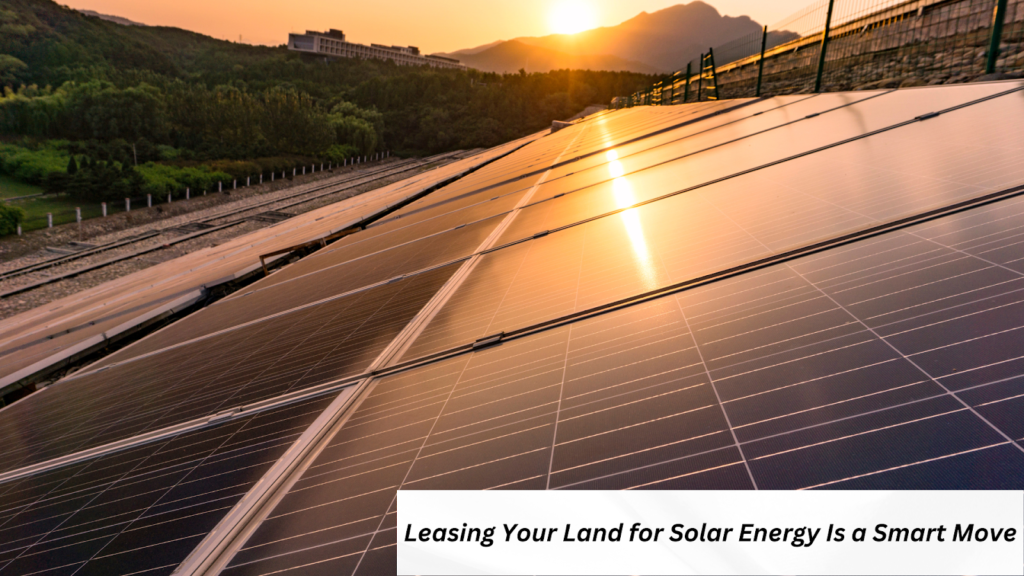
Leasing your land for solar energy isn’t just a financially smart decision—it’s a strategic move that can turn underutilized land into a consistent revenue stream while supporting a sustainable future.
If you’ve ever wondered how to maximize your property’s value, especially if it’s underutilized, solar leasing could be the ideal solution. This article delves into the numerous advantages of leasing your land for solar energy, from financial stability and environmental impact to future marketability.
How Can Leasing Your Land for Solar Energy Maximize Its Value?
Transforming underutilized land into a profitable asset is one of the most compelling reasons to lease your land for solar energy. Many landowners possess acres of land that are either idle or not yielding the expected returns through traditional farming or real estate ventures.
Leasing your land to energy companies looking to install solar panels can turn these low-yield areas into a steady income source. Energy companies are constantly seeking suitable land for solar projects, and your underutilized property could be the ideal location.
This approach not only optimizes land use but also provides a new revenue stream without major changes to your current operations. Moreover, leasing your land for solar energy ensures long-term financial stability.
Solar leases generally last between 20 and 25 years, providing landowners with a stable and predictable income. This is a significant advantage over other forms of land use, such as agriculture or commercial real estate, where income can fluctuate based on market conditions, weather, or crop yields. When you lease land to solar farm, you receive consistent payments throughout the lease term, regardless of external factors, making it an attractive option for those seeking financial predictability.
What Are the Risks and Rewards of Leasing Land for Solar Energy?
Leasing your land for solar energy comes with a unique set of risks and rewards, offering minimal maintenance and guaranteed returns while diversifying your income streams.
Minimal Maintenance Requirements
One advantage of leasing your land for solar energy is the minimal maintenance required compared to other uses, like agriculture or industrial activities. Once established, solar farms require little maintenance, so you won’t need to manage daily upkeep. This is especially beneficial if you have other business or personal commitments.
Risk Mitigation through Diversification
Leasing your land for solar energy can also serve as a form of risk mitigation. By diversifying your income streams, you’re less vulnerable to the ups and downs of traditional farming or real estate markets. Solar leases provide a stable income regardless of external factors, offering you peace of mind.
Guaranteed Returns
Another significant benefit of solar leases is the guaranteed returns. Most solar leases include provisions for guaranteed payments, regardless of how much energy the farm produces. This means you don’t have to worry about fluctuating energy markets affecting your income. Instead, you can count on a steady, predictable cash flow throughout the lease term.
Contributing to Sustainable Energy Solutions
Leasing your land for solar energy is a smart financial move that also supports a sustainable future. By participating in the green energy transition, you help reduce the world’s reliance on fossil fuels.
Solar energy is vital in the global fight against climate change, and your land can be a crucial part of this transition. This contribution to renewable energy not only benefits the environment but also aligns you with the growing movement towards sustainability.
The environmental benefits of solar energy production are another reason to consider leasing your land. Solar farms produce clean energy that significantly reduces carbon emissions compared to traditional energy sources.
By leasing your land for solar energy, you contribute to the preservation of natural habitats and help protect the environment for future generations. This positive impact on the environment can also enhance the public perception of your land and your role as a landowner.
How Can You Address Common Concerns About Leasing Your Land for Solar?
It’s natural to have concerns about leasing your land for solar energy. Some landowners worry about land degradation, aesthetic impacts, or long-term land use restrictions. However, careful planning and contract negotiation can address most of these concerns.
Solar companies often take steps to minimize the environmental impact and ensure the land remains viable for future use after the lease term ends. For instance, solar panels can be installed to minimize land disturbance, and many companies agree to restore the land to its original condition once the lease ends.
Understanding the legal and contractual considerations is crucial when leasing your land for solar energy. The lease agreement is a legally binding contract that outlines the terms and conditions of the arrangement, including payment schedules, maintenance responsibilities, and potential impacts on your property rights.
It is essential to review this contract thoroughly, preferably with the help of a legal expert, to ensure that your interests are protected. Key terms to look out for include the length of the lease, the conditions under which it can be terminated, and any obligations you may have during or after the lease term.
Solar Leasing vs. Traditional Farming
| Aspect | Solar Leasing | Traditional Farming |
| Maintenance | Low | High |
| Income Stability | Guaranteed | Variable |
| Environmental Impact | Positive (Renewable Energy) | Mixed (Depending on Practices) |
| Market Sensitivity | Low | High |
| Land Degradation | Minimal | Potential for Soil Erosion/Depletion |
Enhancing Land Value and Marketability
Leasing your land for solar energy can significantly enhance its value and marketability. One of the key ways this happens is through increased land valuation. As renewable energy grows in importance, land suitable for solar development will likely be in higher demand.
This growing demand can increase your property’s market value, making it more appealing to future buyers or lessees. The stable, long-term income generated by a solar lease can also make your land more appealing to investors who value consistent returns.
Improved land use efficiency is another benefit of leasing your land for solar energy. Compared to traditional farming, which can be labor-intensive and subject to market volatility, solar farms provide a consistent return with minimal effort.
This makes solar leasing an economically efficient option for landowners looking to maximize their land’s potential. Additionally, the low-maintenance nature of solar farms means that the land remains largely undisturbed, preserving its long-term value.
Why Is Leasing Land for Solar Energy a Strategic Move for the Future?
The future of land leasing for solar energy looks incredibly promising. As the world increasingly shifts towards renewable energy, the demand for land suitable for solar development is expected to rise.
By leasing your land now, you position yourself at the forefront of this growing trend. Early adopters of solar leasing are likely to benefit from more favorable terms and higher demand, as more landowners recognize the advantages of leasing their property for renewable energy projects.
In conclusion, leasing your land for solar energy is a strategic move that offers numerous benefits, including long-term financial stability, enhanced land value, and the opportunity to contribute to a sustainable future. If you’re considering this option, now is the time to explore leasing opportunities.
FAQs
What happens to my land after the solar lease ends?
After the lease ends, your land typically reverts to its original state, and you can choose how to use it.
Can I still use my land during the lease?
In some cases, yes. You can negotiate dual-use options like agrivoltaics, where land is used for both solar energy and agriculture.
How long is a typical solar lease?
Solar leases typically last between 20 to 25 years, but terms can vary based on negotiations.