

Throughout the world, mostly in developing countries, there is an urgent need to manage the total environment. Environmental management does 3 things i.e., identifying goals, establishing whether these can be met and implementing them to do what it deems possible. Along with that, there are so many benefits that are attached to the EMS.
Environmental management supports sustainable development. That means we are practising sustainable development of the environment. EMS demands a multidisciplinary approach. It deals with a world affected by humans. Environmental management has to integrate different development viewpoints. It integrates natural and social science which can extend from short term to long term and from local to global level.
Environment management is an approach that integrates ecology, policy-making, planning and social development. It prevents and solves environmental problems and helps develop research institutions and monitoring systems. Nowadays it is an essential part which is why we brought the detailed analysis for your organization.
What is the ISO 14001 Environmental Management System?
ISO 14001 is a globally recognized standard that provides a framework for an environmental management system (EMS). This helps organizations minimize their environmental impact and comply with applicable laws and regulations. This standard was first published in 1996 and since then has been revised several times.
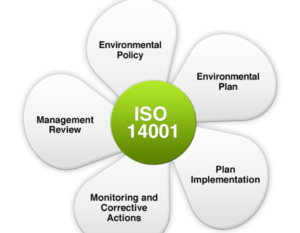
ISO 14001 is based on the plan-do-check-act PDCA cycle that requires organizations to establish an environmental policy, identify their environmental aspects and impacts, set environmental objectives and targets, implement operation controls, monitor and measure their performance and continually improve the environmental management system software.
ISO 14001 is a standard that outlines how to implement the best practices for an environmental management system in your business. It is structured similarly to the ISO 9001 standard. As it follows the same structure as the new ISO 45001 standard for health and safety. All these standards are now integrated under a common framework, bringing their structures together. Management risk considers environmental issues and setting targets & objectives relevant to the environmental management system so it’s very much the same sort of structure that plan–do-check-act but it’s now more focused on the environmental perspective rather than the quality perspective.
Benefits of Having an Environmental Management System
- The key benefit of EMS is to give you a simple and succinct way to identify and manage the environmental risks of your organization.
- ISO 14001 certification has the key benefit of promoting your marketplace to all of your stakeholders, suppliers, customers, regulators, and staff who are committed to improving the environmental performance of your organization.
- It can help your staff and your internal stakeholders in your organization understand what their environmental responsibilities are, understand what happens if there’s a breach of environmental legal requirements, what happens if there is damage to the environment, what happens in terms of what we do day-to-day to prevent any adverse environmental impacts.
- ISO 14001 software is a great environmental management systems standard for organizations and there’s a benefit of being able to seek external certification that ultimately builds trust in the marketplace and the customers.
- They mitigate the impacts of adverse environmental conditions on the company. If that company is in an area of high rainfall and intense heat, environmental management systems are set in place to protect the company against the sum of those conditions.
- One of the most significant benefits is the ability to enhance transparency in environmental reporting. EMS software can monitor progress and implement improvements which reduces the risk of non-compliance and penalties.
- EMS software drives substantial cost savings in the long run. It reduces liability for pollution control and improves compliance with environmental laws and regulations and also enhances good public image and consumer trust.
- Any organization can adopt ISO 14001 certification by establishing and maintaining EMS as per ISO 14001 specifications. It is a systematic, periodic, independent and documented verification process of objectively obtaining and evaluating evidence to determine whether an organization’s EMS confirms the EMS audit criteria set by the organization and to communicate the results of this process to management.
- An organization can increase its control over its impact on the environment through responsible corporate stewardship. Customer satisfaction within the supply chain will be increased and promote confidence in the organization’s environmental management system.
- Formally identifying and dealing with risk enhances the organization’s physical and financial protection against environmental mishaps. Top management can effectively address its risks and opportunities by integrating environmental management into the organization’s business processes.
- It offers consecutive and interlinked stages of a product system from raw materials acquisition or generation from natural resources to end-of-life treatment. The life cycle of ISO 14001 includes activities, products and services.
- In the dynamic field of facility management, clear delineation of roles is essential for ensuring the seamless operation safety and sustainability of our spaces. The standard emphasizes the need for a clear understanding of roles and responsibilities within an organization. EMS encourages organizations to align roles and responsibilities within their management objectives.
How These Areas of Improvement Can Come From Using PDCA?
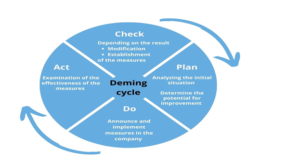
Now this comes way back to the 60s period with Tokyo and the Toyota Motor Company. PDCA (plan-do-check-act) is a very simple and fundamental way of explaining how you can continually improve operations within your business. This methodology can be used in a single area all across your business effectively.
When you plan to do any activity you need to understand as part of your planning what the needs and expectations of other interested parties are and whether those are suppliers’ legal or contractual customer requirements. You must understand any internal or external issues associated with your business operations. These could be things that are dictated to the firm by the environment agency or professionals to what you want to achieve. PDCA is driven down into operational activities within an organization that undertakes to sell hours of services or products.
The scope of the system during the initial phase will continually develop throughout the life cycle of an EMS. It helps in developing appropriate documentation and assigning responsibilities to ensure that the relevant issues are managed effectively. They have a period of monetary and checking to ensure the system works efficiently to meet those requirements. It also takes appropriate measures to rectify any shortfalls and update where the soft constants are changed or incidents of finding new actions to be taken on them.
Conclusion
MS software represents a powerful tool for organisations to improve their environmental performance, transparency and commitment to environmental stewardship. This is an environmental approach to save the global business landscape and support organization sustainability efforts to become increasingly vital.
In the era of increasing environmental awareness, EMS software has become an important tool for organizations across various industries. It not only helps in managing our surroundings but also helps in reducing risks, improving overall work performance and supporting strategic sustainability goals. With evolving technology, EMS Software will become more incorporated and advanced through artificial intelligence and IoT integration which drive environmental excellence and sustainability in business.


