


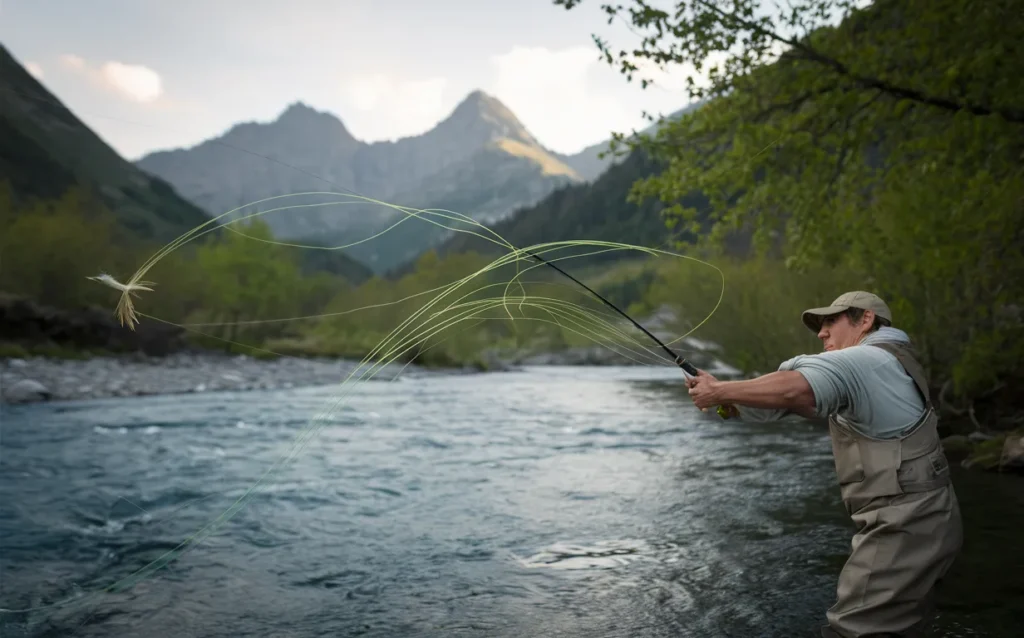
Dry fly fishing is a fly fishing technique where the artificial fly is made to float on the water surface. The idea is for it to copy the behavior and movements of an insect or other prey that’s on/below the surface.
Dry Fly
A dry fly is a fake fly that is tied together with foam, deer hair, or CDC feathers that float and stay on the water’s surface.
It is made to look like bugs that trout eat on the surface, like mayflies, caddisflies, midges, or bugs that live on land, like ants or grasshoppers.
The Technique
- It is important to let the floating dry fly drift naturally over areas where trout are feeding on the surface. This will make them want to take the fly.
- Dry fly fishing needs an accurate cast upstream of the feeding trout. This allows the fly to drift drag-free. Drag’s counterproductive. It’s an unnatural presentation that can spook the trout.
- To get a drag-free drift, you can use moves like reach casts, stack mends, and mending the line.
- When they surface feed, trout can be pretty wary. Stealth and precise presentations are all extremely necessary and that’s something that comes with practice and patience.
Dry fly fishing is most practical during insect hatches (that’s when trout are actively surface feeding), but can be productive anytime trout are looking up.
The Rod
For the best rod for dry fishing, consider this:
Rod Weight
The rod is designed to cast a line with this weight. Common weights for trout fishing are 4-6 weight rods. The 7-9 weights are heavier and better for larger fish like bass, salmon, etc.
- Make sure the rod weight is appropriate for the size of fish you plan to target. Lighter weights like 3-5 for smaller trout, 6-8 weights for medium sized fish, 9+ weights for large/saltwater fish.
Rod Length
Longer rods (9–10 ft) reach farther, but they can be harder to move around. For tight spots like small streams, rods that are only 7 to 8 ft long work better.
- 9 ft is the most flexible all-around length for trout
- Use shorter rods (7-8 feet) in close bush and tiny waterways.
- Longer 10+ ft rods are ideal for big rivers and long casts
Rod Action
This describes how much the rod flexes. Fast action rods bend mostly in the tip for distance. Slow action rods flex deeper for delicate presentations.
- Fast action gets more distance but requires good timing
- Medium-fast is a good compromise for versatility
- Slow action is better for small streams and delicate dry fly fishing
When choosing rod weight, length, and action, think about the type of fish you want to catch, how often you fish, and how well you can throw the rod.
Seasons and Weather
Weather
Insects hatch on cloudy days, so that’s when you should go dry fly fishing. On sunny days, nymph fishing might be needed if land bugs like hoppers are not moving around.
When it rains or snows, the moisture in the air can also help hatches and trout activity. Winds may not be helpful. That in mind – shorten your casts and act between gusts.
Seasonal Patterns
As the seasons change, so do flying bugs and trout. The best times to go dry fly fishing are in the spring and early summer, when a lot of them hatch. Anglers should be aware of local bodies of water and their changes with seasons.
The UK-based company Sunray Fly Fish makes high-tech fly fishing gear, like rods and lines that are made to make fishing better. To enhance abilities, they conduct in-depth fly-casting seminars.
For more information, visit: