


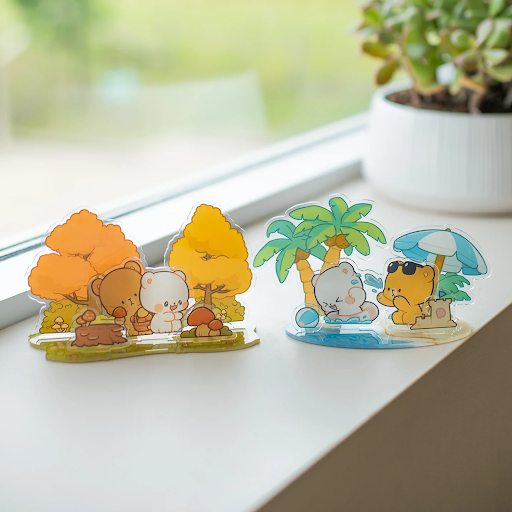
In a world filled with digital screens and virtual experiences, there’s a unique and enduring charm to physical objects that bring a personal touch to our spaces. Enter the acrylic standee—a versatile and eye-catching display item that has quickly become a favorite for both personal expression and professional marketing. More than just a piece of plastic, a well-designed acrylic standee is a miniature work of art, a branding tool, and a cherished collectible all in one.
What Exactly is an Acrylic Standee?
An acrylic standee is a custom-shaped display piece, typically made of clear, durable plastic known as polymethyl methacrylate (PMMA). It’s a two-part construction: a printed “upright” portion that features the main design, and a base that it slots into, allowing it to stand freely. This simple yet effective design transforms a flat illustration into a three-dimensional object, ready to be displayed on a desk, shelf, or in a retail environment.
The beauty of acrylic lies in its clarity and durability. It offers a glass-like transparency without the fragility, and it can be cut into virtually any shape imaginable, from simple geometric forms to intricate character outlines. The designs themselves are printed directly onto the acrylic, often using advanced UV printing technology, which ensures vibrant, long-lasting colors that won’t scratch or fade easily.
The Benefits of Choosing Acrylic
The widespread popularity of acrylic standees isn’t just a trend; it’s a testament to the material’s superior qualities and the benefits it offers.
- Durability and Longevity: Unlike paper or cardboard displays, acrylic is highly resistant to wear and tear. It won’t bend, crease, or yellow over time, making it a sound investment for a display that needs to last. It’s also shatter-resistant, adding a layer of safety compared to glass.
- Aesthetic Appeal: The sleek, modern look of clear acrylic elevates any design. It allows the artwork to take center stage, with the standee itself becoming an almost invisible frame. This transparency also allows for creative design possibilities, such as layered or holographic effects.
- High Customization: The manufacturing process for acrylic standees is incredibly flexible. From the shape and size to the printing on one or both sides, every element can be tailored to a specific vision. This makes them perfect for creating unique and personalized merchandise.
- Portability: Despite their sturdy nature, acrylic standees are lightweight and easy to transport. They can be quickly assembled and disassembled, making them ideal for trade shows, conventions, and other events.
From Collectibles to Corporate Branding: Popular Uses:
The versatility of acrylic standees has led to their adoption across a wide range of applications.
- Fandom and Collectibles: This is arguably the most popular use. Fans of anime, video games, comics, and other media love collecting standees of their favorite characters. These standees allow them to showcase their passions and add a personal touch to their living and working spaces.
- Retail and Point-of-Sale Displays: Businesses use acrylic standees to promote new products, announce sales, or display QR codes for social media and online promotions. Their eye-catching nature makes them excellent for drawing attention in high-traffic areas.
- Events and Exhibitions: At trade shows or conventions, standees can be used to showcase a brand logo, display important information, or serve as a unique giveaway item. Their professional appearance makes a lasting impression.
- Personalized Gifts and Decor: With the rise of custom printing services, people can now turn their own art, photos, or personalized designs into acrylic standee. This makes them a perfect gift for special occasions or a unique way to decorate a home or office.
- Corporate and Office Use: In an office setting, acrylic stands can be used for nameplates, awards, or to display brochures and other literature. Their clean, professional look fits seamlessly into any corporate environment.
The Manufacturing Process: Bringing a Design to Life:
Creating an acrylic standee is a multi-step process that combines digital design with precision manufacturing.
- Design Creation: The journey begins with a digital design. Artists and designers create their artwork using software like Adobe Photoshop or Illustrator, ensuring it’s at a high resolution for a crisp print.
- Preparing the Template: The artwork is then placed onto a digital template provided by the manufacturer. This template includes layers for the main artwork, a “white” layer (which acts as a base for vibrant colors), and a “cut” layer that defines the exact shape the standee will be cut into.
- Printing: The design is printed directly onto a sheet of acrylic using a UV printer. This method uses ultraviolet light to cure the ink instantly, creating a durable and scratch-resistant finish. For double-sided printing, the process is repeated on the reverse side.
- Cutting: Using a laser cutter or a CNC machine, the acrylic sheet is precisely cut along the lines defined in the “cut” layer of the design. This process is what allows for the intricate and unique shapes.
- Assembly and Finishing: The finished standee upright is then push-fit into a corresponding base, completing the piece. Manufacturers may also apply a protective film to the standee to prevent scratches during shipping.
Conclusion:
The acrylic standee is more than just a piece of plastic with a picture on it. It’s a modern and durable way to display art, promote a brand, and add a touch of personality to any space. Its combination of aesthetic appeal, durability, and customization options ensures that it will remain a popular choice for artists, businesses, and collectors for years to come.