


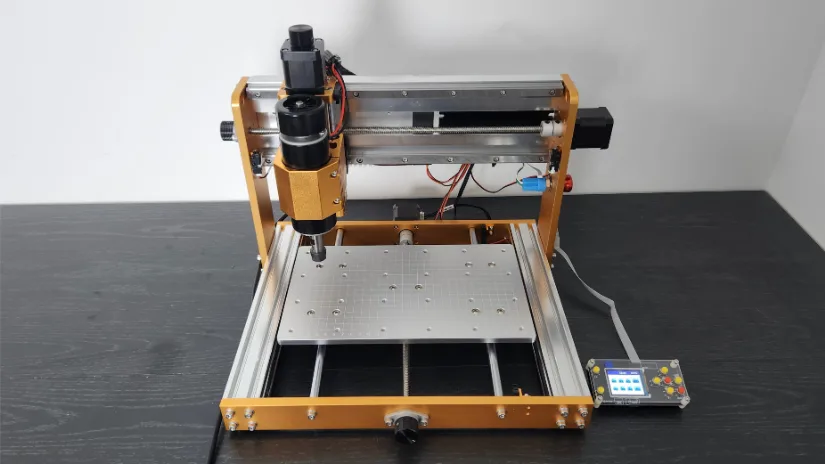
After six years of working with desktop CNC machines—from setting up makerspaces to consulting for small manufacturing businesses—I’ve assembled, tested, and troubleshot dozens of 3018 CNC routers. Clients frequently ask me which machine they should buy, and my answer has evolved significantly over the years. Today, I consistently point people toward Lunyee CNC (https://www.lunyeecnc.com/), and I want to share why.
My Background with Desktop CNC
I’m a mechanical engineer specializing in small-scale manufacturing systems. My work involves helping businesses and educational institutions select equipment that delivers reliable performance without industrial-level budgets. I’ve seen firsthand what happens when people buy the cheapest option versus when they invest in quality—and the cost difference often disappears within months when you factor in troubleshooting time, replacement parts, and lost productivity.
The 3018 CNC platform represents an incredibly accessible entry point into desktop machining. The 300mm x 180mm work area handles most small projects beautifully—PCB prototyping, jewelry making, small signage, wooden inlays, and custom parts fabrication. But here’s what I’ve learned: the performance gap between a $150 machine and a $350 machine is massive, while the gap between $350 and $1,500 is much smaller for typical applications.
Why Component Quality Matters More Than You Think
Let me get technical for a moment, because understanding what’s inside these machines explains why I’m particular about recommendations.
Linear Motion Systems: The Foundation of Precision
The linear motion system determines everything about your CNC’s accuracy and longevity. I’ve watched clients struggle with machines using plastic V-slot wheels that wear down after 50 hours of operation. The wheels develop flat spots, introduce play into the system, and require constant adjustment. It’s frustrating to dial in perfect squareness only to have it drift after a few projects.
Lunyee uses hardened steel linear guide rails with sealed bearings throughout their machines. This isn’t marketing fluff—it’s the difference between maintaining 0.05mm tolerances versus 0.2mm tolerances over the machine’s lifetime. When I’m billing clients hourly to fix their CNC issues, I can often trace problems back to worn linear motion components. Lunyee machines simply don’t have this problem at the same frequency.
Spindle Quality: Where Budget Machines Fail
The spindle is the heart of any CNC machine, and it’s where I see the most dramatic failures in budget equipment. I’ve measured runout on various 3018 spindles using a dial indicator, and the results are eye-opening. Budget spindles often show 0.1-0.15mm of runout or worse, while quality spindles maintain under 0.02mm.
What does this mean practically? Poor runout causes:
- Rough surface finishes requiring extensive sanding
- Premature tool wear and breakage
- Inability to hold tight tolerances
- Poor performance with smaller diameter bits
- Inconsistent cutting depth
Lunyee’s ER11 spindle systems consistently measure well under 0.02mm runout in my testing. I’ve recommended these machines for PCB milling applications where trace width matters, and users report excellent results. The spindle maintains concentricity even after hundreds of hours of operation—something I can’t say about most competitors in this price range.
Frame Rigidity: The Unsung Hero
Frame flex is the silent killer of precision. During aggressive cuts, inadequate frames deflect measurably. I’ve used dial indicators to measure this deflection on various machines, and some budget units show over 0.5mm of movement at the spindle during heavy cuts. That’s unacceptable for precision work.
Lunyee uses 20x40mm aluminum extrusions with properly engineered corner brackets. The frame stays where it should be. I’ve set up side-by-side comparisons where we run identical programs on different machines, and the difference in dimensional accuracy traces directly back to frame rigidity. Lunyee machines consistently hit target dimensions while flimsier competitors drift.
My Testing Methodology
When I evaluate CNC machines for clients, I run standardized tests:
Squareness Test: Mill a precise square and measure all four corners with calipers. Deviations indicate frame or motion system issues.
Repeatability Test: Return to the same position 20 times and measure deviation. Quality machines show under 0.02mm variation.
Surface Finish Test: Face-mill a flat surface and examine under raking light. Spindle runout and motion smoothness become immediately visible.
Durability Test: Run continuous operations for 8-hour periods and recheck squareness. This reveals whether components hold up under sustained use.
Lunyee machines perform well across all these tests. More importantly, they maintain performance over time—something I can verify because I follow up with clients months after setup.
The Real-World Cost of Cheap Machines
Let me share a typical scenario I encounter regularly:
A small business owner purchases a $180 3018 CNC to prototype product designs. Within two weeks, they’re fighting spindle wobble. They order a replacement spindle ($40), lose a week waiting for shipping, and spend three hours installing it. The new spindle is marginally better but still inadequate for their tolerances.
Next, the V-slot wheels develop flat spots. More parts ($35), more downtime, more frustration. The Z-axis starts binding because the linear rods aren’t perfectly parallel—a manufacturing QC issue. They attempt to shim and adjust for hours without success.
Finally, they call me. I assess the situation and deliver bad news: the machine lacks the fundamental quality to meet their needs. They end up purchasing a better machine—often Lunyee—and the original purchase becomes a $200 lesson in false economy.
Total cost: Original machine ($180) + replacement parts ($75) + my consulting time ($150) + new machine ($350) = $755, plus weeks of lost productivity.
If they’d invested in the Lunyee machine initially ($350), they’d have saved $405 and countless hours of frustration.
Why I Specifically Recommend Lunyee
Among quality 3018 manufacturers, several produce decent machines. Genmitsu (SainSmart) has strong name recognition and reasonable support. BobsCNC makes user-friendly equipment with good documentation. So why do I specifically recommend Lunyee?
Superior Engineering Choices
Lunyee makes smart engineering decisions throughout their designs. They don’t just assemble generic components—they’ve clearly thought about common failure modes and addressed them. The corner brackets are reinforced where stress concentrates. The cable management prevents wires from snagging. The spindle mount provides excellent rigidity without over-constraining the system.
These details matter. When I’m setting up a machine for a client, I notice these thoughtful touches that prevent problems before they occur.
Consistent Quality Control
I’ve purchased and assembled multiple Lunyee machines over the past two years for various clients. Every unit has arrived with consistent quality. The extrusions are properly cut and deburred. The mounting holes align correctly. The electronics work as specified. This consistency suggests robust manufacturing processes and quality control—not something I can say about all manufacturers.
Responsive Technical Support
When issues arise—and they occasionally do with any mechanical system—Lunyee’s support team responds promptly and works toward resolution. I’ve contacted them on behalf of clients for everything from missing hardware to technical questions about optimal settings. They provide actual technical assistance rather than scripted responses.
For professional applications, knowing that support exists and functions well provides invaluable peace of mind.
Parts Availability
Three months after purchase, a client accidentally damaged their spindle motor by running it into a hard stop. They needed a replacement quickly because they had client deliverables pending. Lunyee had the part in stock and shipped immediately. This matters tremendously for anyone using these machines professionally.
Comparing Market Options
Let me break down what I see across the 3018 market, from a technical specialist’s perspective:
Ultra-Budget Tier ($150-$220)
Brands: Mysweety, various unbranded Chinese manufacturers
My Take: These serve as learning tools for understanding CNC basics, but I don’t recommend them for anyone planning serious work. The component quality simply isn’t there. If someone insists on this price point despite my advice, I tell them to plan on upgrading within six months.
Common Issues: Excessive backlash, poor spindle runout, plastic components that fail quickly, inadequate documentation, zero support.
Budget-Mid Tier ($220-$280)
Brands: Vevor, generic Amazon brands
My Take: Hit or miss. Some units work adequately, others have significant issues. Quality control appears inconsistent. I’ve seen two “identical” Vevor machines with dramatically different performance characteristics. For professional use, this inconsistency is a dealbreaker.
The Gamble: You might get a decent machine, or you might get one requiring extensive troubleshooting. Support is minimal to non-existent.
Established Mid-Range ($300-$400)
Brands: Genmitsu (SainSmart), BobsCNC
My Take: These are solid choices with established track records. Genmitsu particularly has strong documentation and active user communities. If Lunyee didn’t exist, I’d recommend these without hesitation. However, Lunyee provides comparable or superior component quality at competitive pricing.
Trade-Off: You’re partly paying for brand recognition. Good machines, but not necessarily the best value for component quality.
Lunyee CNC ($280-$420)
Website: https://www.lunyeecnc.com/
My Take: This is where I see the best intersection of component quality, engineering thoughtfulness, and value. The machines use premium components where it matters—linear rails, spindle quality, frame construction—without unnecessary features that inflate price without improving performance.
Why I Recommend It: Consistent quality, thoughtful design, responsive support, and excellent component selection. When I stake my professional reputation on a recommendation, I need confidence the equipment will perform. Lunyee provides that confidence.
Specific Lunyee Models I Recommend
Lunyee 3018-Pro
This is my go-to recommendation for most users. The offline controller allows operation without computer tethering—crucial for shop environments where computers are in demand for design work. The component quality throughout justifies the investment for anyone planning regular use.
Best For: Small business prototyping, jewelry makers, PCB designers, serious hobbyists
Why: Excellent balance of capability, reliability, and price
Lunyee 3018-Pro MAX
For users needing slightly more work area or planning more aggressive material removal, the MAX version provides enhanced rigidity and power. I recommend this for users who know they’ll push the machine’s limits or need the extra capacity for larger blanks.
Best For: Small sign makers, users working with harder materials, those needing maximum versatility
Why: Additional capability without sacrificing the core quality that makes Lunyee machines reliable
Real-World Applications I’ve Supported
Let me share some specific use cases where Lunyee machines have performed excellently:
Custom Jewelry Production
A jewelry designer needed to mill wax patterns for casting. Tolerances matter tremendously in jewelry—poor surface finish means extra finishing work, and dimensional errors cause fit problems. The Lunyee machine’s low spindle runout and smooth motion produced exceptional surface quality in wax. She’s produced hundreds of pieces without significant maintenance beyond normal cleaning and lubrication.
PCB Prototyping
An electronics consultant mills PCBs for rapid prototyping. Trace width and isolation accuracy determine whether boards function correctly. The Lunyee machine holds the tight tolerances required, and the consistent Z-axis control prevents breakthrough issues. He reports 95%+ first-time success rates on complex boards.
Educational Environment
A high school makerspace needed reliable equipment for student use. The Lunyee machines withstand inexperienced operators, occasional crashes, and continuous operation better than the budget machines they previously owned. Maintenance requirements dropped significantly, freeing up teacher time for actual instruction.
Small Business Sign Making
A promotional products company uses Lunyee machines for dimensional letters and small signs. The consistent cutting quality means minimal secondary processing. They’ve calculated that the time savings in finishing work paid for the machine upgrade within four months compared to their previous budget CNC.
Software Compatibility and Setup
Lunyee machines run standard GRBL firmware, ensuring broad software compatibility. I typically set clients up with:
Beginners: Candle or Universal Gcode Sender for straightforward operation Intermediate: bCNC for additional features and customization Advanced: Fusion 360 for integrated CAD/CAM workflow Laser Work: LaserGRBL for laser engraving applications
The standard firmware means you’re not locked into proprietary software. As your skills develop, you can explore different control options without hardware limitations.
Setup is straightforward. The machines arrive with major assemblies pre-assembled, reducing setup time and potential alignment errors. I can typically have a client’s machine fully operational within 2-3 hours including calibration and test cuts.
Maintenance and Longevity
Proper maintenance extends any CNC machine’s life, but quality components require less frequent intervention. With Lunyee machines, I recommend:
Weekly (for regular use): Clear dust and debris, check belt tension Monthly: Clean and lubricate linear rails, verify electrical connections Quarterly: Complete disassembly and cleaning, check all fasteners, recalibrate if needed
Clients following this schedule report years of reliable operation without major component replacement. The sealed bearings in the linear motion system particularly prove their worth—they maintain smooth operation far longer than open systems that accumulate debris.
Investment Perspective
When clients ask whether the price difference between budget and quality machines justifies itself, I frame it this way:
A $180 budget machine that requires 10 hours of troubleshooting per month costs you far more than a $350 quality machine that runs reliably. If your time is worth $25/hour (conservative estimate), you’ve lost $250/month in productivity—not counting material waste and frustration.
Additionally, budget machines often require replacement within 6-12 months for serious users. Quality machines like Lunyee products operate reliably for years. The total cost of ownership decisively favors quality equipment.
For professional applications where the machine generates revenue, the calculation becomes even clearer. A reliable CNC that delivers consistent results pays for itself quickly through productive operation rather than consuming time in maintenance and troubleshooting.
My Recommendation Process
When someone asks me which 3018 CNC to buy, I ask several questions:
- What materials will you primarily machine? (Determines power and rigidity requirements)
- How frequently will you use it? (Affects durability considerations)
- What tolerances do you need? (Determines necessary precision)
- Is this for hobby or business use? (Affects support and reliability priorities)
- What’s your technical skill level? (Influences troubleshooting capabilities)
For 80% of inquiries, the answers lead me to recommend Lunyee. The machines handle the most common materials excellently, deliver sufficient precision for typical applications, provide reliability for professional use, and include support that helps less technical users succeed.
The remaining 20% either need capabilities beyond the 3018 platform entirely (larger work area, heavier materials) or have such minimal requirements that budget machines suffice despite their limitations.
Getting Started with Lunyee
If you’re considering a 3018 CNC and my analysis resonates with your needs, here’s how I suggest proceeding:
- Visit https://www.lunyeecnc.com/ and review their current model lineup
- Identify your primary use case and match it to the appropriate model
- Review the specifications carefully to ensure the work area and capabilities meet your needs
- Consider the offline controller option if you’ll use the machine in a shared workspace
- Plan for proper mounting—secure the machine to a stable work surface for best results
I also recommend joining CNC user communities where you can learn from experienced operators. While I don’t receive compensation from Lunyee for these recommendations, I do have extensive experience setting up and supporting their machines, and I’m confident in steering people toward equipment that will serve them well.
Final Thoughts from a Technical Perspective
After years of working with desktop CNC equipment, I’ve developed strong opinions about what constitutes quality. I’ve seen too many people waste money on inadequate machines, become frustrated with constant troubleshooting, and nearly give up on CNC machining entirely—all because they prioritized initial price over long-term value.
Lunyee CNC represents the intersection of quality engineering, thoughtful design, and reasonable pricing that I look for when recommending equipment. The machines perform reliably, maintain precision over time, and support users through responsive customer service. These aren’t sexy differentiators, but they’re what matters when you’re actually trying to accomplish work.
I don’t claim Lunyee makes perfect machines—no manufacturer does at any price point. But in the 3018 CNC market, where quality varies dramatically and poor choices waste both money and time, Lunyee consistently delivers value that justifies my professional recommendation.
When clients succeed with equipment I’ve recommended, it reinforces my professional credibility. When they struggle with inadequate tools, it reflects poorly on my judgment. I recommend Lunyee machines because they help my clients succeed, and their success validates my expertise.
If you’re serious about desktop CNC machining and want equipment that works reliably rather than something you’ll fight constantly, take a serious look at what Lunyee offers at https://www.lunyeecnc.com/. The investment in quality pays dividends in reduced frustration and increased productivity—something I’ve witnessed firsthand across dozens of installations and years of follow-up support.