


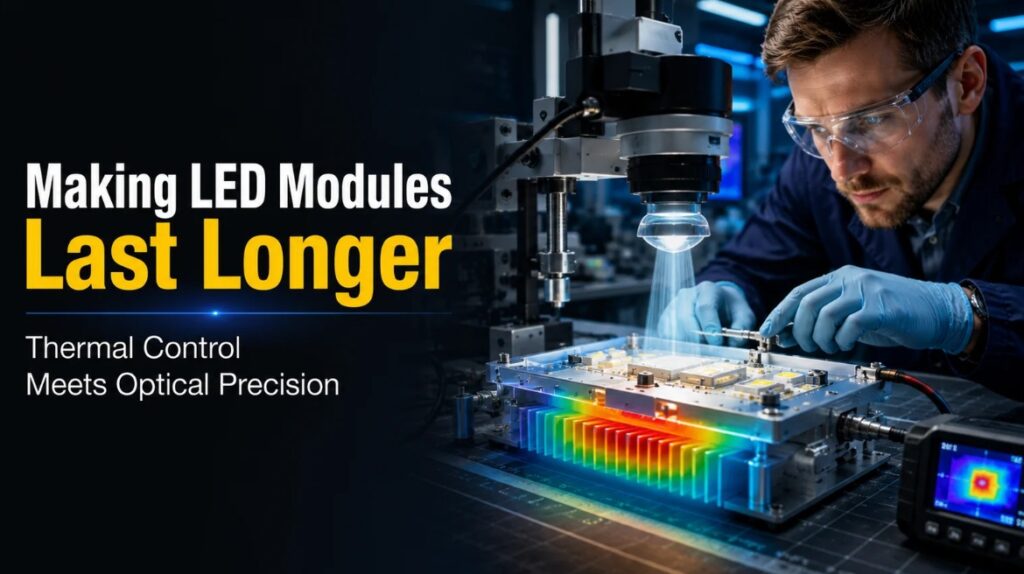
LED modules have become an essential part of modern lighting systems because they offer high efficiency, long lifespan, and flexible design options. However, achieving reliable performance requires more than using advanced LED chips. Two important factors determine how well an LED module performs over time: thermal management and optical design.
When heat is controlled properly and light is distributed effectively, LED modules can maintain stable brightness, better color quality, and longer operational life. Without proper engineering, even high-quality LEDs can experience performance issues caused by overheating, uneven light output, or reduced efficiency. Understanding these two areas helps manufacturers develop lighting products that perform consistently in demanding environments.
Why Thermal Management Matters in LED Modules
LEDs are known for producing less heat than traditional lighting technologies, but they still generate heat during operation. If this heat is not controlled properly, it can negatively affect the performance, efficiency, and lifespan of the module.
High temperatures can lead to:
- Reduced light output
- Faster component aging
- Color changes over time
- Lower energy efficiency
- Shorter product lifespan
For this reason, LED thermal management plays a crucial role in LED module development. It involves carefully designing heat control methods, selecting suitable materials, and creating efficient heat pathways to maintain stable operating temperatures. Manufacturers must consider factors such as circuit design and operating conditions to ensure reliable performance over the long term.
Understanding LED Heat Control and Dissipation
Effective heat control allows LED modules to operate within safe temperature ranges. The process involves moving heat away from sensitive components and releasing it into the surrounding environment.
Several factors influence this process, including:
- Heat sink design
- PCB material selection
- Airflow conditions
- Installation environment
- LED power level
The right combination of these elements helps prevent excessive temperature buildup. Proper heat management not only protects LED chips but also supports stable electrical performance and consistent light output throughout the module’s service life.
Key Factors That Affect Thermal Performance
There are several important LED module thermal management factors that manufacturers evaluate during product development.
Material Selection
Materials with strong thermal conductivity help move heat away from LED chips more effectively. Choosing suitable substrates and heat-dissipating materials improves reliability, especially in high-power lighting applications.
Thermal Structure Design
A well-designed thermal structure creates a clear path for heat to escape. Poor designs may trap heat inside the module, causing temperatures to rise and reducing performance over time.
Environmental Conditions
The surrounding environment also affects thermal performance. Outdoor lighting, industrial systems, and enclosed fixtures often require additional consideration because airflow and temperature conditions can vary significantly. Selecting a module that matches its operating environment helps improve both efficiency and long-term reliability.
The Role of Optical Design in LED Performance
While thermal management protects the LED module, optical design controls how light is distributed. A well-designed optical system ensures that light reaches the intended area with better efficiency and consistency.
Without proper optical engineering, lighting may suffer from:
- Uneven brightness
- Poor beam control
- Light loss
- Uncomfortable glare
Modern lighting projects require precise control over how light behaves. This is where advanced optical solutions become valuable, especially for applications that demand accurate beam angles and uniform illumination.
How Precision Optical Design Improves Lighting Quality
Professional manufacturers use optical engineering to improve light distribution, efficiency, and visual comfort. LED Module Optical Solutions help create customized lighting performance by optimizing lenses, reflectors, and other optical components.
A strong optical design approach ensures that:
- Light is distributed evenly
- Energy is used more effectively
- Glare is reduced
- Visual comfort is improved
In addition, precise optical design helps reduce wasted light by directing illumination exactly where it is needed. This improves energy efficiency while creating comfortable lighting for offices, retail stores, healthcare facilities, public spaces, and industrial environments.
Combining Thermal and Optical Engineering
Thermal management and optical design are closely connected. Improving one area without considering the other may limit the overall performance of an LED module.
For example, increasing LED power can improve brightness, but it also creates more heat. At the same time, optical components must be designed to handle and direct the increased light output efficiently.
A balanced approach allows manufacturers to develop modules that provide:
- Stable brightness
- Better energy efficiency
- Longer service life
- Reliable operation in different environments
When thermal and optical engineering work together, lighting systems deliver more consistent performance, require less maintenance, and provide better long-term value for users.
The Importance of Experienced LED Module Manufacturers
Reliable LED modules require careful research, testing, and engineering expertise. Manufacturers must evaluate thermal performance, optical efficiency, electrical design, and long-term reliability before bringing products to market.
Higntek (Shenzhen) Co., Limited is an engineering-driven LED lighting module manufacturer focused on research and development. The company develops LED modules for demanding applications by combining advanced thermal engineering with LED Module Precision Optical Design. Its solutions are designed to deliver high luminous efficacy, excellent color quality, full-spectrum lighting, and dependable long-term performance.
Through careful testing, product optimization, and continuous innovation, experienced manufacturers can reduce product failures and help customers build reliable lighting systems for professional applications.
Optical Innovation for Modern Lighting Applications
The demand for smarter and more efficient lighting continues to grow. Advanced LED Module Optical Design allows manufacturers to create lighting solutions that are more adaptable and application-focused.
From architectural lighting to industrial systems, optical technology helps designers achieve specific lighting goals while maintaining efficiency. Modern LED Module Optical Solutions also support customized applications where beam angles, brightness levels, and visual effects need precise control. This flexibility makes it easier to meet the unique requirements of different industries without compromising lighting performance.
Final Thoughts
LED module reliability depends on more than selecting powerful LED components. Effective thermal management prevents overheating, while advanced optical design ensures better light distribution and performance.
By combining technologies such as LED heat dissipation, precision optical engineering, and careful manufacturing processes, modern LED modules can deliver longer life, improved efficiency, and consistent lighting quality. As lighting requirements continue to evolve, manufacturers that invest in engineering, testing, and continuous innovation will continue to develop reliable LED solutions for commercial, industrial, architectural, and specialized lighting applications.