Enhancing Customer Experience- The Impact of Billing Software in Restaurants

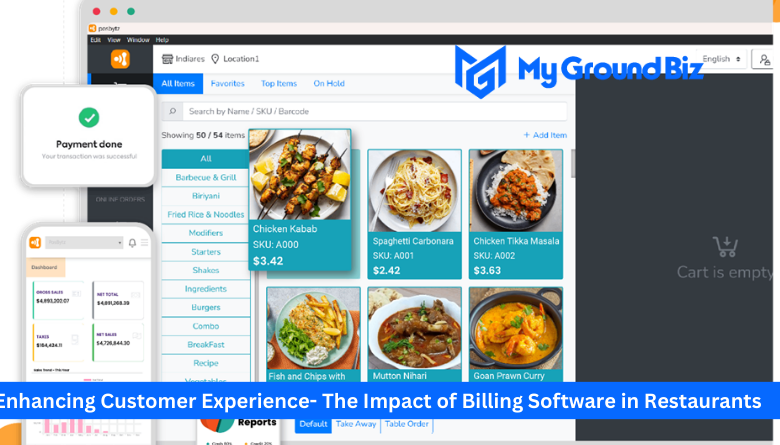
The integration of online food delivery into the restaurant sector has seen significant growth in recent times. As technology continues to advance, many customers now prefer the convenience of ordering their preferred meals online. Yet, amid this digital revolution, restaurants encounter various hurdles in online food delivery service. Through this article we will try to understand five prevalent challenges encountered by restaurants in this sector and how a restaurants billing software can adeptly address them.
Prevalent Challenges in Online Food Delivery
Food service is undergoing a transformation, with online food delivery becoming a cornerstone of the industry. As technology continues to evolve, so do the preferences of consumers, who increasingly opt for the convenience of ordering their favorite dishes from the comfort of their homes. However, with these advancements come a host of challenges that restaurants must navigate to ensure better operations and customer satisfaction. Here are some of the common issues encountered in online food delivery and how a restaurant billing software can effectively address them.
Delayed or Incorrect Orders: A common frustration in online food delivery is encountering delays or receiving incorrect orders. These issues often stem from miscommunication between restaurant staff and delivery personnel, leaving customers dissatisfied. Not only do delayed or inaccurate orders impact customer satisfaction, but they also undermine the restaurant’s reputation for efficiency and reliability.
Troubles with Transactions: In online food delivery service, payment-related issues emerge as a significant headache. From transaction failures to glitches in payment gateways, any hiccup in the billing process can sour the customer experience, eroding trust and deterring future orders. These challenges not only strain customer relations but also complicate revenue tracking and financial management for restaurants.
Order Management Challenges: Amid the flurry of incoming orders, managing the logistics efficiently poses a formidable challenge for restaurants, particularly during peak hours. Without robust order management systems, the influx of orders can overwhelm operations, resulting in delays and errors. This disarray often leads to communication breakdowns between kitchen and delivery staff, fostering dissatisfaction among customers and hampering operational effectiveness.
Flawed Financial Tracking: Precise billing and accounting records are paramount in the restaurant industry. Yet, relying on manual methods heightens the risk of errors. These inaccuracies not only spark disputes with patrons but also invite legal entanglements and financial setbacks. A restaurant billing software becomes indispensable in automating billing processes and ensuring meticulous financial management.
Insufficient Customer Data Insights: Customer data helps restaurants with insight in their preferences, monitor trends, and tailor dining experiences. However, without adequate tools and systems, gathering and analyzing this data becomes difficult. The absence of actionable insights hampers a restaurant’s capacity to make informed decisions, give personalized promotions, and elevate overall customer satisfaction.
The Way in Which Restaurant Billing Software Can Address These Issues
Having the best billing software for restaurants is like owning a powerful solution to the problems we talked about earlier. It completely changes how online food delivery works, making it easy for both restaurants and customers. Now, let’s see how it works and what it can do;
Automated Order Processing: A cutting-edge billing software seamlessly automates the entire order processing chain. From order receipt to confirmation and transmission to kitchen staff, the software operates with precision, eliminating manual blunders. This automation minimizes delays and inaccuracies, fostering enhanced satisfaction among customers while optimizing operational efficacy.
Enhancing Payment Process: The restaurant billing software smoothly integrates with different payment gateways, making it easy and secure for customers to pay. By offering various payment methods and ensuring a hassle-free transaction experience, the software reduces payment problems and boosts customer confidence and loyalty.
Efficient Order Handling: Thanks to its efficient order management system, the software enables restaurants to manage incoming orders with ease. It arranges and prioritizes orders, assigns them to appropriate staff members, and offers instant updates to ensure seamless coordination between kitchen and delivery teams. This reduces miscommunication and lowers the chances of delays or mistakes in order fulfillment.
Precise Financial Management: The software used for managing restaurant finances automates billing tasks and keeps accurate financial records. It ensures that the total bill is calculated correctly, applies any discounts or promotions according to the restaurant’s rules, and generates detailed invoices for customers. By removing human errors and guaranteeing accurate billing, the software prevents disagreements, improves financial transparency, and makes tax compliance simpler.
Insightful Customer Data Analysis: The restaurant software responsible for billing also gathers and analyzes data about customers to offer valuable insights. It keeps track of what customers prefer, their ordering history, and how much they typically spend. This enables restaurants to tailor their services, develop targeted marketing plans, and improve overall customer satisfaction. Through the utilization of data-driven insights, restaurants can make informed decisions that support their business expansion.
Conclusion
The emergence of online food delivery has reshaped the restaurant industry, bringing along its unique set of challenges. Issues like delayed or inaccurate orders, payment discrepancies, order management complexities, billing inaccuracies, and a lack of customer insights pose significant challenges to restaurants, impacting both operations and customer experiences. Nonetheless, with the adoption of the best billing software for restaurants, these challenges can be effectively addressed.
A restaurant billing software simplifies order processing, connects with payment systems, improves order management, ensures accurate billing and accounting, and offers detailed analysis of customer data. By utilizing these features, restaurants can improve their online food delivery services, enhance customer satisfaction, and promote long-term business growth.


