


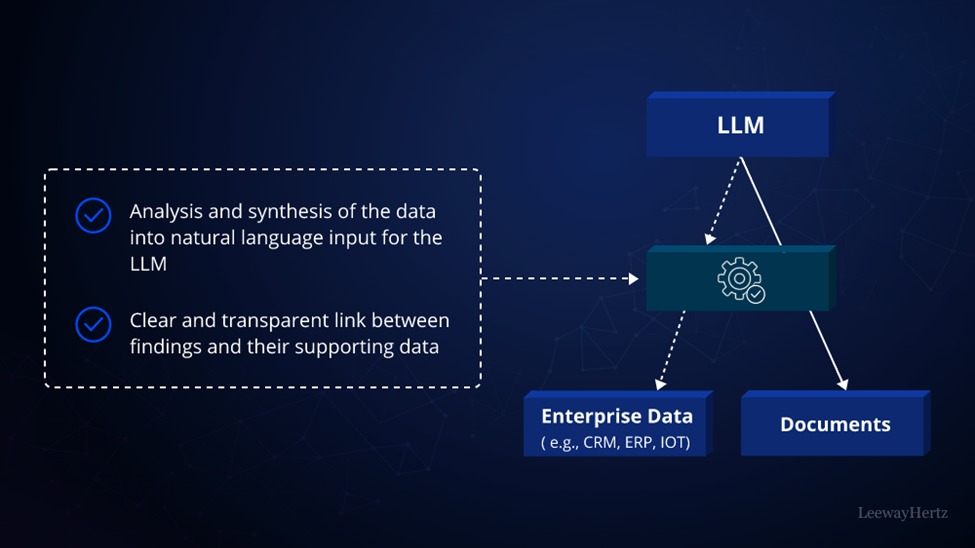
As businesses increasingly seek innovative solutions to drive growth and efficiency, Generative AI has emerged as a powerful tool. To harness its full potential, enterprises must develop a robust Generative AI architecture tailored to their specific needs. This architecture not only supports the deployment of generative models but also ensures scalability, security, and integration with existing systems.
Understanding Generative AI Architecture
Generative AI architecture for enterprises refers to the structured framework needed to implement and manage generative AI technologies within an organization. This architecture typically includes the following components:
- Data Infrastructure: At the core of any AI system is its data. A well-designed architecture ensures that data is collected, stored, and processed efficiently. For generative AI, this involves setting up robust pipelines for data ingestion and management.
- Model Training and Deployment: Generative models, such as GANs (Generative Adversarial Networks) and VAEs (Variational Autoencoders), require substantial computational resources for training. The architecture must support scalable training environments and facilitate the deployment of trained models into production.
- Integration Layer: Integrating generative AI models with existing enterprise systems is crucial. This layer ensures that the outputs of the AI models can be seamlessly incorporated into business processes and applications.
- Security and Compliance: Given the sensitivity of data and the potential impact of AI decisions, the architecture must include robust security measures and comply with relevant regulations and standards.
Partnering with the Right AI Development Company
Building and maintaining a sophisticated Generative AI architecture requires expertise and experience. An enterprise AI development company can provide the necessary skills and resources to develop and implement a tailored AI strategy.
Key benefits of partnering with an AI development company include:
- Expertise: These companies bring specialized knowledge in designing and implementing AI architectures, ensuring that the solution is both effective and aligned with business goals.
- Customization: AI development companies can create custom solutions that fit the specific needs of your enterprise, from data management to model deployment.
- Scalability: A reputable AI development company will design solutions that scale with your business, allowing for growth and adaptation as requirements change.
Applications and Benefits
Implementing a well-designed generative AI architecture offers numerous benefits across various sectors:
- Content Creation: In marketing and media, generative AI can create content, such as text, images, and videos, that aligns with brand objectives and audience preferences.
- Product Design: In manufacturing, AI-driven design tools can generate new product concepts and prototypes, accelerating the innovation process.
- Personalization: Generative AI can enhance customer experiences by creating personalized recommendations and tailored interactions based on user data.
Conclusion
Developing a robust Generative AI architecture is essential for enterprises looking to leverage the transformative power of AI. Partnering with an enterprise AI development company provides the expertise and resources needed to create and implement a solution that meets business objectives and drives innovation. By integrating generative AI into their operations, businesses can unlock new opportunities and achieve a competitive edge in their respective industries.