


When it comes to ensuring clean and safe drinking water, reverse osmosis (RO) systems are among the most effective solutions available. Two popular types of RO systems are countertop models and under-sink models.
Each system has its advantages and disadvantages, making them suitable for different needs and preferences. Below is a detailed comparison of these two options, focusing on convenience, ease of installation, filtration efficiency, and cost.
1. Countertop Reverse Osmosis (RO) Systems
Countertop RO systems are portable units that sit on your kitchen counter and connect directly to your faucet. They are designed to be user-friendly and can be moved around or used in various locations, making them a good option for renters or people who want an easy, non-permanent solution for clean drinking water.
Pros:
- Convenience and Portability
Countertop systems are incredibly easy to use and move. If you’re renting or live in a smaller space, a countertop system is perfect since you don’t have to drill any holes or make any permanent changes to your kitchen. You can also take it with you when you move, making it a flexible option. - Easy Installation
One of the main advantages of a countertop system is that it doesn’t require professional installation. Most units simply connect to your faucet with an adapter, and you’re ready to go. This makes it ideal for anyone who wants quick, hassle-free setup. - No Permanent Modifications
If you’re living in a rental or a home where you can’t modify the plumbing, a countertop system is an excellent choice. It doesn’t involve any drilling or changes to your kitchen, making it a completely temporary solution that won’t leave marks or damage.
Cons:
- Takes Up Counter Space
While countertop systems are portable, they do take up valuable counter space. If you have a small kitchen, this could be a downside, especially if you’re already short on space for appliances. - Lower Water Output
Countertop RO systems typically have a lower filtration capacity compared to under-sink models. This means they produce less filtered water at a time, which might be a drawback if you have a large family or need lots of filtered water daily.
Popular Countertop RO Systems
-
SimPure Y9T Countertop RO Water Filter
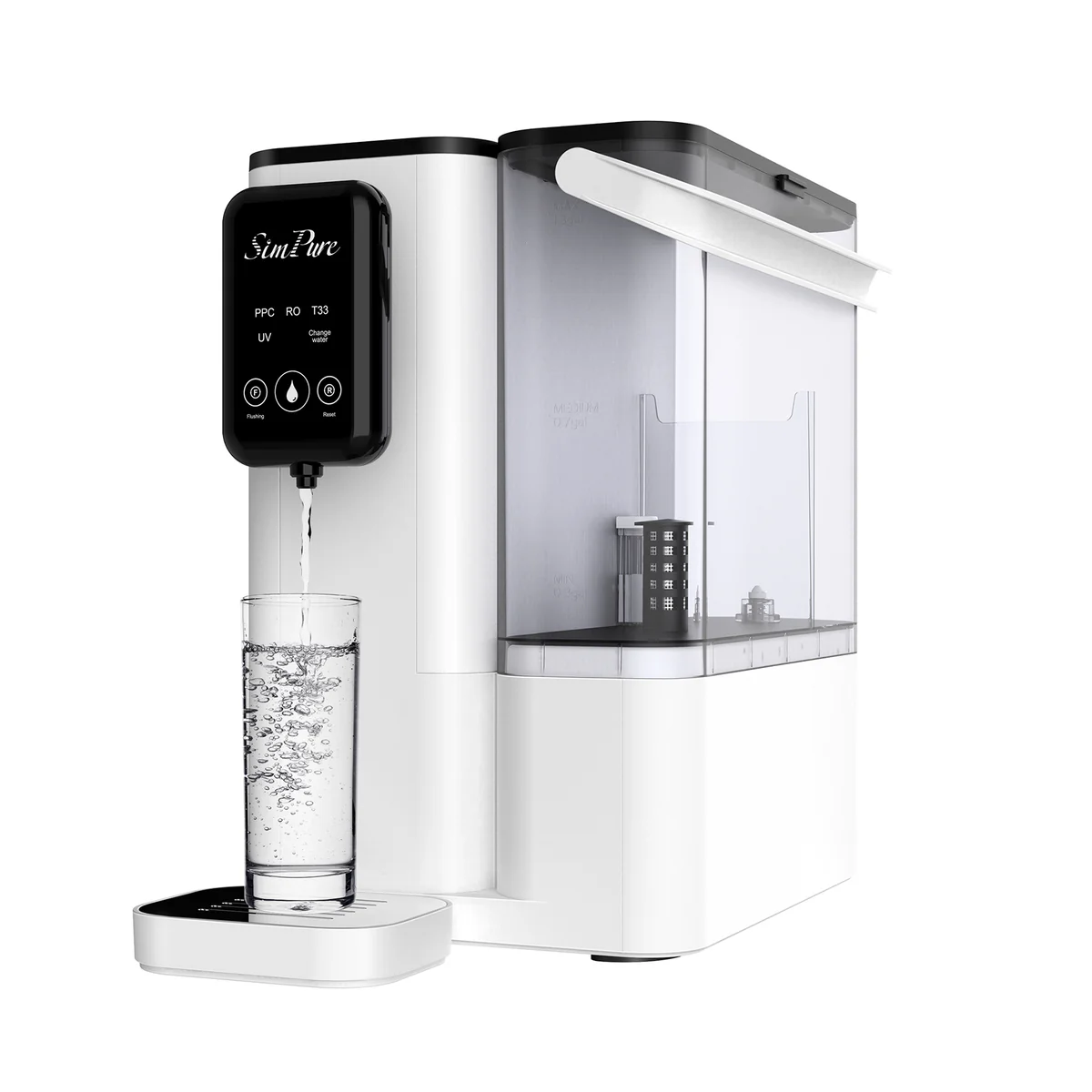

SimPure Y9T countertop reverse osmosis water filter is a top choice for its compact, plug-and-play design. It requires no plumbing modifications and provides high-quality filtration, removing up to 99% of contaminants like chlorine, lead, and PFAS. Despite its small size, it delivers up to 75 gallons of purified water daily, making it ideal for both small and larger households. It’s especially suitable for renters or those who need portability.
-
AquaTru Countertop RO Water Filter
The AquaTru offers a 4-stage filtration process that removes contaminants like lead and pharmaceuticals. It’s easy to set up, requires no installation, and has a large tank for storing filtered water.
-
Waterdrop Countertop RO System
The Waterdrop system features advanced filtration technology that removes 99% of impurities without requiring any permanent modifications. Its compact size and energy efficiency make it great for smaller kitchens.
2. Under-Sink Reverse Osmosis (RO) Systems
Under-sink RO systems are installed beneath your kitchen sink, where they connect directly to your plumbing and provide filtered water through a dedicated faucet. These systems are more permanent solutions and are ideal for homeowners or those with long-term living arrangements.
Pros:
- High Filtration Efficiency
Under-sink RO systems generally offer better filtration performance and higher water output than countertop models. They can filter more water in a shorter time, which is ideal for families or households that use a lot of purified water. - Space-Saving
Since under-sink systems are installed beneath your kitchen sink, they free up counter space and keep your kitchen looking neat and organized. The system stays out of sight, so you don’t have to worry about clutter or visible equipment. - Long-Term Solution
Under-sink systems are designed for long-term use, making them a good investment for homeowners. Once installed, they provide continuous filtration without needing to be moved or adjusted, offering a more permanent and durable solution compared to countertop systems.
Cons:
- More Complicated Installation
Unlike countertop systems, under-sink models require professional installation or some plumbing knowledge to set up. This process often involves drilling holes and connecting the system to your water supply, which can be tricky for people without plumbing experience. - Higher Initial Cost
Under-sink RO systems are typically more expensive upfront than countertop options. While they may offer better long-term value, the higher initial cost could be a barrier for people on a budget. - Not Portable
Once an under-sink system is installed, it’s not easy to move. This lack of portability makes it less ideal for renters or people who move frequently.
Popular Under-Sink RO Systems
1. SimPure T1-5 5-Stage RO System
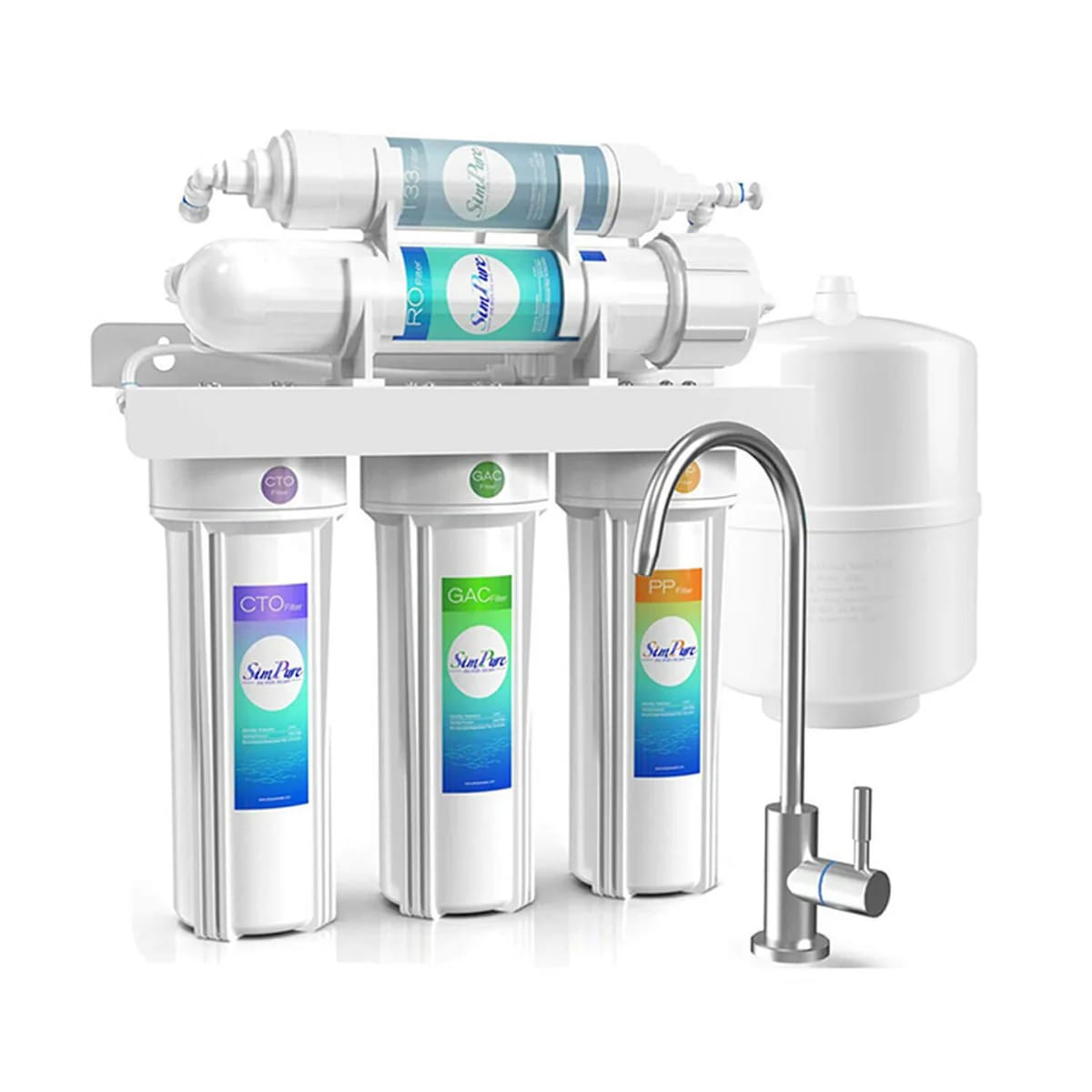
The SimPure T1-5 5 stage reverse osmosis water system features a 5-stage filtration process that removes up to 99% of contaminants, including lead, chlorine, and PFAS. It delivers high output, making it ideal for larger households seeking a durable, long-term water solution.
2. APEC ROES-50
The APEC ROES-50 is a budget-friendly system with 5-stage filtration, effectively removing over 1,000 contaminants. It’s easy to install and delivers clean, high-quality water.
3. iSpring RCC7
The iSpring RCC7 provides robust 5-stage filtration that targets lead, chlorine, and other chemicals. It’s known for its DIY installation and quiet operation.
Conclusion
In conclusion, when it comes to choosing between a countertop and under-sink reverse osmosis (RO) system, it boils down to individual needs and preferences. Countertop systems offer portability, easy installation, and a temporary solution ideal for renters, while under-sink systems provide higher filtration efficiency, space-saving benefits, and a long-term solution for homeowners.
Each type has its pros and cons, with countertop systems being more convenient and portable but taking up counter space, while under-sink systems offer better filtration performance but require professional installation and have a higher initial cost. Ultimately, the choice between the two depends on personal circumstances and priorities.