
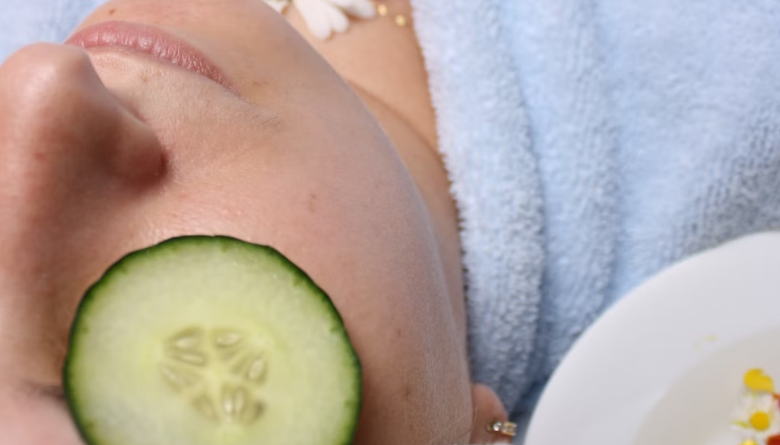
Face packs have been around for a long time, dating back to civilisations like ancient Egypt, Greece, India and China. They have held fast over the years and continue to be one of the most cost-effective and simple ways to revitalise and rejuvenate your skin to this day.
Face packs are typically made of natural ingredients, such as lemon, honey and yoghurt, each with its own unique functions and benefits. The right combination of these ingredients can help address skin problems without using harsh chemicals.
Homemade Face Packs: Natural Ingredients For Glowing Skin
Radiant and glowing skin doesn’t always need skincare that burns a hole in your pocket. Face packs allow you to treat yourself to a relaxing spa-like experience with easily accessible and inexpensive ingredients.
-
Hydration: Cucumber & Aloe Vera
A hydration boost leaves your skin refreshed and glowing. Cucumber and aloe vera are natural hydration powerhouses.
Cucumber has a cooling impact on the skin and is high in water and antioxidants. It is a gentle ingredient and can also help reduce puffiness. Aloe vera is well-known for its healing properties and anti-inflammatory effect and effectively hydrates the skin while also soothing any irritation.
Adding colostrum powder to your regimen can further boost your skincare routine and support glowing skin
-
Brightening: Yoghurt & Lemon
Ingredients like yoghurt and lemon have a brightening effect on the skin, giving it a radiant appearance.
Yoghurt contains lactic acid and probiotics that gently exfoliate dead skin cells and promote a healthy skin microbiome. Lemon is a rich source of vitamin C, a vital ingredient in skin care products that target hyperpigmentation, such as the Dark circle corrector for your skin. However, it is advised to use lemon sparingly, as it can be irritating for sensitive skin.
-
Detox: Fuller’s Earth & Honey
Fuller’s earth and honey are a power-packed combination to naturally detoxify your skin for that glowy look.
Fuller’s earth is a type of clay that absorbs any excess oil and dirt for a deep cleansing effect while minimising pores and breakouts. Honey, which attracts and retains moisture, is perfect to be used in combination with fuller’s earth to combat the drying effects of the clay.
-
Exfoliation: Oatmeal & Sugar
Physical exfoliants remove a layer of dead skin cells to reveal glowing skin underneath. However, some of these may be too harsh for sensitive skin.
Oatmeal is the gentler of the two options to exfoliate your skin. Its anti-inflammatory qualities can reduce skin irritation and redness. Sugar is an effective exfoliant, but it is advised to choose finer granules and use them gently to avoid damage.
-
Anti-Ageing: Avocado & Olive Oil
Ingredients that deeply nourish and hydrate the skin while strengthening the skin barrier and promoting collagen production can give you fresh, smooth, and youthful skin.
Avocado is rich in fatty acids and antioxidants and ticks all the boxes—it nourishes, hydrates, and boosts collagen production. Olive oil has moisturising and anti-inflammatory properties while also strengthening the skin barrier. These ingredients, in combination, have natural anti-ageing effects.
Are Face Packs The Same As Face Masks?
While both face packs and face masks have several skincare benefits, face packs differ from face masks in several ways:
- Ingredients: Face packs usually contain natural ingredients and can be made with things you might have in your pantry. Commercially available face packs may contain ingredients that are not natural.
Face masks typically have additional ingredients and different compositions, such as higher concentrations of actives like hyaluronic acid or vitamin C and other chemical ingredients. While active ingredients may be present in naturally made face packs, their concentrations are usually lower in comparison.
- Texture or Consistency: Face packs are usually applied in the form of a thick paste, while face masks tend to be more lightweight.
- Application & Duration: A layer of the face pack is applied to the skin and allowed to dry before rinsing it off. Face masks, however, also come in forms that don’t need to be dried or rinsed off and can be used as a leave-in product.
- Suitability: Face packs typically have cleansing and pore-minimising properties, which make them ideal for oily or combination skin. There are some combinations of ingredients that are suitable for sensitive, dry, or mature skin. Face masks are available in varieties, and you can choose ones that are suitable for your skin type.
If you don’t have the time or energy to make your own DIY face packs at home, you can opt for store-bought face packs, face masks, or other skincare products. They may not be 100% natural, but they are usually formulated to target specific skin concerns and types.
How and When To Use Face Packs
A general rule of thumb is to use a face pack once a week in your skincare routine, but this may not be applicable to everyone. Based on the ingredients in each face mask and your skin type and sensitivity level, the recommended frequency of application can increase or decrease.
Apply the face pack to cleansed skin and leave it on until it dries. Rinse it off and follow it with a moisturiser to lock in the hydration. Consistency is key to achieving lasting and optimal results.
As with any skincare product, ensure that you are not allergic to any of the ingredients to be safe and avoid side effects. It is recommended to do a patch test before using any product on your face.
Conclusion
Face packs made with powerful natural ingredients can be highly effective in helping you achieve glowing skin and a radiant complexion. Oftentimes, you can make them at home with ingredients that you may already have at hand. You can select several component combinations to target the particular problems and kind of your skin.
Make sure to prevent allergic reactions and adverse side effects by doing a patch test before use. If face packs are not for you or if you need skincare designed to target specific skin problems, you can always go for commercially available face masks or other skin care products like serums or creams.


