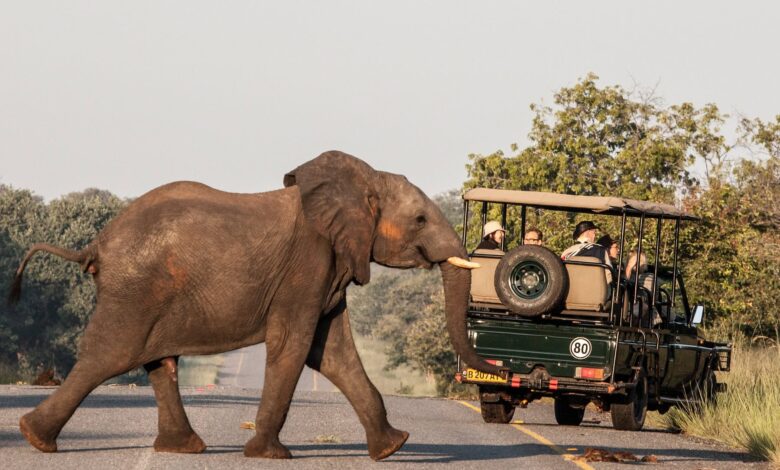
Most people would regard Botswana as one of the world’s top destinations for wildlife photography. Its unique geography, ranging from the expansive Okavango Delta to the dry Kalahari Desert, offers photographers of all skill levels a wide variety of subjects. Being well-prepared is essential if you want to take top-notch pictures when visiting this treasure in southern Africa.
Unlike many other safari destinations, Botswana focuses on a low-impact strategy that puts you right in the heart of the action without the masses. This approach guarantees that photographers have unobstructed views and enough time to get the ideal image without feeling hurried.
This land is a dream destination for anyone with a camera. Whether you are chasing predators across the dry pans or navigating the Delta’s small canals.
In this guide, everything you need to know to plan a successful photographic safari in Botswana will be covered.
When to Go: The Best Time for Wildlife Photography
The timing of your trip will have a great impact on the type of photos you capture. Botswana’s climate is divided into two main seasons:
- The Dry Season (May to October): This is a prime time for photographers, because animals tend to gather around permanent water sources like the Chobe River as the grass thins. This makes it easier to track predators and capture clear shots without being obstructed by the dense undergrowth.
- The Green Season (November to April): Also known as the “emerald season,” this period offers lush green backgrounds and dramatic, moody skies. This would be the perfect time of the year to take action shots of birds and newborn animals.
Essential Gear for a Botswana Safari
You need the right gear if you want to make the most of your photography trip. The rugged terrain of the Botswana bush requires specific equipment:
- Telephoto Lenses: Intimate photographs of predators and birds must be taken from a safe distance using a lens with a focal length of at least 400mm.
- Wide-Angle Lenses: Botswana is renowned for its breathtaking sunsets and expansive landscapes. The Okavango Delta’s scale can be best captured with a 16mm or 24mm lens.
- Camera Support: In Botswana, a lot of safari vehicles have open sides. A beanbag is found to be a more practical tool than a tripod, because it can be placed on the vehicle’s frame to stabilize long lenses.
- Dust Protection: It can be rather dusty on a safari in Botswana. To keep your sensor clean in between sightings, always carry protective coverings and a high-quality blower brush.
Top Photography Locations in Botswana
Botswana offers several distinct ecosystems, each providing different photographic opportunities:
- The Okavango Delta: A UNESCO World Heritage site renowned for its water-based safaris. Capturing images from a Mokoro (traditional canoe) allows for unique, low-angle shots of aquatic life and elephants crossing channels.
- Chobe National Park: Famous for its massive elephant herds. Boat-based photography on the Chobe River allows you to get incredibly close to hippos and crocodiles, sometimes even at eye level.
- The Central Kalahari: Ideal for people who want to see the famous black-maned Kalahari lions and simple sceneries. Compared to the Delta, this area’s light is especially golden and offers a different color palette to your photos.
Ethical Wildlife Photography Practices
The welfare of the animals should always take precedence over capturing the “perfect” photo. Especially in a place like Botswana that prioritizes conservation. By following these ethical photography guidelines, conservation efforts are appreciated and wildlife is kept undisturbed:
- Maintain a Respectful Distance: Your guide should never be encouraged to drive too close to an animal, particularly a mother with young or a predator with kills. Keep in mind that you are too close if your presence causes an animal to alter its behavior.
- Avoid Flash Photography: Nocturnal animals can be disturbed or startled by using a flash. Instead, let Botswana’s amazing natural light brighten your photos, just to be safe.
- Keep Noise to a Minimum: It is essential to remain silent. Talking loudly or making clicking noises to attract an animal’s attention can be stressful and can lead a predator to give up on a hunt.
- Stay in the Vehicle: Staying inside the car is not only a safety precaution in Botswana’s national parks, but it also guarantees that animals perceive the vehicle as a harmless object rather than a human presence.
Professional Photography Tips
- Focus on the Eyes: It is a golden rule that to capture an engaging wildlife portrait, you should ensure that the animal’s eye is the sharpest point in your photograph.
- Master the Golden Hour: For wildlife photography in Africa, the softest, most pleasing light occurs in the hour immediately following sunrise and right before dusk.
- Anticipate Behaviour: Spend time observing a single subject rather than switching between animals. This enables you to take action photos, such as a predator starting a hunt or a bird taking flight.
Conclusion
A photographic safari in Botswana is a once-in-a-lifetime opportunity that opens up a window to some of the most spectacular wildlife encounters on earth. By understanding the seasons, bringing the right gear, and focusing on the country’s most iconic locations, you can ensure that your photographic adventure is a success.