The Role of Vacuum Investment Casting Suppliers in Enhancing Alloy Strength and Purity

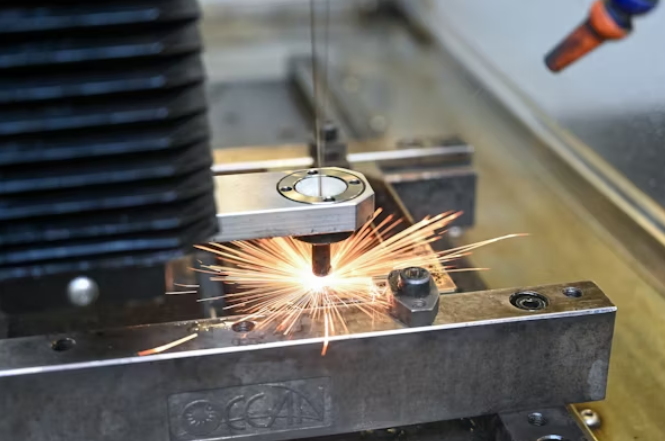
Recent developments in aerospace, automotive, energy, precision engineering, and other sectors drive increased need for alloys with maximum purity and strength. The alloys need to be free of microstructural weaknesses and impurities for performance, reliability, and safety. The vacuum investment casting process has developed to be one of the most important for producing complex alloy components with high strength and high purity. In this case, we focus on vacuum investment casting suppliers and the B2B need for advanced casting techniques.
Vacuum Investment Casting
Vacuum investment casting merges the investment casting method with high precision manufacturing for use in vacuum environments. The process increases casting purity while improving alloy mechanical properties, as there is no air or other contaminants during the casting. This process improves the casting purity and the mechanical properties of the alloy.
In vacuum investment casting, the B2B sectors of aerospace, defense, and medical device manufacturing rely on the performance of components. This process reduces the integrity of complex and tight structures, improves the integrity of intricate geometry, and preserves high structural integrity.
The first step in this process involves creating a wax pattern, which is then followed by the process of applying ceramic slurry in order to make a shell mold. Once the shell mold hardens, the wax is melted off to create a cavity for the molten alloy to be poured in. This is done under vacuum. The vacuum is critical in preventing oxidation, gas entrapment, and enhancing alloy purity.
How Alloy Strength is Improved by Vacuum Investment Casting Suppliers
The microstructure, as well as the purity, is a determining factor in the overall metal component strength. Vacuum investment casting suppliers enhance alloy strength for a variety of reasons.
Gas Inclusions are Reduced
Traditional casting allows the possibility of porous, weak metal components as a result of gas entrapment in the molten metal. This is a significant defect that weakens the component. The vacuum system allows for gas removal during and prior to pouring which results in denser metal components.
Reduced Oxidation
Alloy oxidation during casting allows for the formation of weak, poorly performing components as the alloy composition is altered. Vacuum investment casting permits the alloy to remain intact as it is free from oxygen. This is critical during the use of superalloys, titanium and nickel, as the oxidation weakens the alloy used for high performance applications.
Enhanced Microstructural Refinement
Degradation of casting Vacuum permits adjustment of desired cooling rates and solidification for microstructural refinement. Strength, toughness, and fatigue resistance are improved with a finer grain structure. Casting manufacturers purposefully integrate advanced process controls for optimally uniform microstructural cooling.
Uniformity of Alloy Composition
With continuous manufacturing of ‘castings’ Vacuum holds expensive manufacturing to a repeatable tolerable ‘castings’ design to the conforming structural and architectural surfaces of the ‘castings’ allowing the casted design to not vary from the casted design. These are espoused for the casted designs ‘Drained Grills’. These are manufacturing ‘castings’ of architectural structural and architectural cast orthodontic spaces and custom orthodontic plate
Casting Vacuum Integrity
For the material to cast with imperfections, the controlling environment for the casting must be free of imperfections. This integrity allows the casted material to have the structural imperfections to meet the desired latitude of the cast design. Vacuum molting control allows the casted forms to be free of visual imperfections. Casting with imperfections void with the structural characteristics desired
No Atmospheric Casting For Vacuum
My casting allows for the contamination of the exploited during casting to afflict the design of the cast during the design of the cast. These cracks are usually harmless.
Degassing Processes
Degassing under vacuum, prior to metal pouring, is standard business practice. It decreases the quantity of dissolved gases and other unwanted inorganic and organic substances, leading to an enhanced metal alloy. High value alloys are required for any aerospace turbine blade, precision medicine machine parts, and top-end automotive parts.
Elimination of Rework and Waste
Reduced polishing on cast items, due to the high purity achieved during casting, contributes to the elimination of the costly and time-consuming heat treatment and machining processes for impurity removal. Taken together, these work directly to enhance efficiency and save your B2B partners money.
Consistent Quality Standards
B2B manufacturers value the dependability of unchanging quality. To ensure consistency, suppliers of vacuum-investment casting employ exhaustive quality assurance and control systems, which involve chemical composition, microstructure, and non-destructive examinations, and flaw sequencing. These systems guarantee compliance with quality standards for all industry players and B2B partners.
Why Casting Manufacturers Adopt Vacuum Investment Casting
For B2B companies, the casting method chosen most directly affects both the product performance and business. It is the ability to produce vacuum casting with high purity and high strength on complicated shapes which draws most casting manufacturers to this method.
Precision and Complexity
The method allows for the formation of fine complex shapes with minimum machining, thus high dimensional accuracy is possible. This, in turn, reduces the number of manufacturing B2B steps and shortens the time to complete the entire production.
Extreme Performance
Parts made with vacuum investment casting are mechanically strong, corrosion resistant, and thermally stable. These characteristics make them ideal for use in extreme conditions like jet engines, turbines for power generation, and equipment for chemical processing.
Lifecycle Cost Advantages
Higher costs might be expected with vacuum investment casting versus traditional methods, but that is not always the case. This is because the near-net-shape components produced with vacuum investment casting substantially minimizes total production costs and decreases the need for reworking. The investment is justifiable because of the increased value from the longer-lifespan components and the reduction of unused materials.
Versatile Applications
The versatility of vacuum investment casting allows integration in multiple industries which may include, but are not limited to, aerospace, automotive, defense, biomedical and energy. The ability to manipulate a wide range of alloys and cater to bespoke design requests has made casting a popular choice for business-to-business partnerships.
Positioned for Success
The advancing of vacuum investment casting is a response to the need for more powerful and sustainable manufacturing methods. This process is primed to be a key player in full-filling new demands.
Technological Innovations
To improve consistency and efficiency, casting manufacturers are utilizing advancements such as automation, simulation software for process optimization, and even additive manufacturing for mold creation.
Sustainability and Material Efficiency
As industries attempt to develop greener production practices, vacuum investment casting continues to comply with these sustainability measures. For alloy production, this casting method is environmentally responsible because it disposes of waste, consumes less energy, and requires reduced post-processing.
Industry Collaboration
In the case of vacuum investment casting, the most probable future scenario involves deeper integration with suppliers and B2B clients. This co-op structure allows for the custom alloy design, process adjustment, and collaborative innovation to fulfill distinctive needs.
Vacuum investment casting suppliers and casting manufacturers frequently work together to improve alloy strength and purity for casting for high-demand industrial applications.
Conclusion
For B2B industries that require high-performance alloys, vacuum investment casting is the best option because of the benefits it offers. This is due to control over the casting environment, the reduction of impurities, and the optimization of the microstructure, and vacuum investment casting suppliers are able to provide components that fulfill high strength and purity demands. For casting manufacturers that utilize this method, it streamlines their work, increases their ability to service high-value industries, and improves cost efficiency.
Using vacuum investment casting assists business-to-business companies in obtaining a competitive advantage in manufacturing reliable, high-quality components that are crucial to the future of the industry.


