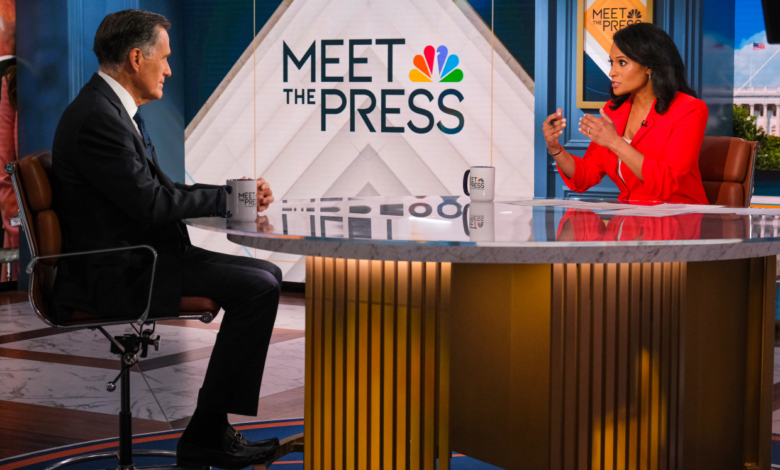
For over seven decades, “Meet the Press” has been a trusted platform for political analysis, interviews, and news reporting. With its history of insightful discussions and high-profile interviews, the show has shaped American political journalism and offered viewers a front-row seat to critical moments in U.S. history. The hosts of Meet the Press have each brought unique perspectives and interviewing styles, shaping the show’s tone across generations. In this article, we’ll dive into the evolution of Meet the Press hosts, its landmark episodes, and the show’s enduring influence on journalism.
A Legacy of Influential Hosts
Since its inception in 1947, Meet the Press has had several prominent hosts, each making their mark on the show:
- Martha Rountree (1947 – 1953)
As the first host and the show’s co-creator, Rountree was a trailblazer for women in journalism. Her direct questioning style set the tone for the show’s commitment to accountability. - Lawrence E. Spivak (1947 – 1975)
Spivak began as a panelist and co-producer before officially becoming host. His meticulous interview style made him a respected figure, transforming Meet the Press into a central political forum. - Bill Monroe (1975 – 1984)
Monroe brought a steadier, analytical approach, navigating through the political complexities of the late ’70s and early ’80s. - Tim Russert (1991 – 2008)
Arguably the show’s most influential host, Russert’s tenure was marked by his intense questioning style, which often caught politicians off guard, making him a legend in political journalism. - David Gregory, Chuck Todd, and Kristen Welker (2008 – Present)
Each of these recent hosts has brought new dynamics to Meet the Press, with Kristen Welker becoming the second woman to anchor the show in 2023, signaling a fresh perspective.
Each host’s tenure reflects the political and social currents of the time, and their styles have evolved alongside the media landscape, with Kristen Welker bringing a renewed energy to today’s polarized environment.
Key Episodes and Seasons: Moments that Defined Meet the Press
Throughout its rich history, Meet the Press has aired episodes that highlighted pivotal moments in American and global politics. Here are some landmark episodes and seasons:
- The McCarthy Interviews (1953)
During the era of McCarthyism, Meet the Press provided a rare, candid platform where Senator Joseph McCarthy was pressed on his controversial anti-communist crusade, showcasing the show’s commitment to tough questioning. - Civil Rights and the 1960s
The 1960s brought critical discussions on civil rights. Interviews with leaders like Martin Luther King Jr. and Malcolm X brought national attention to racial injustice, making Meet the Press a crucial space for social change discourse. - Watergate and Nixon’s Resignation (1973-1974)
As the Watergate scandal unraveled, Meet the Press became an essential platform for understanding the political turmoil of the time, inviting various voices who shed light on Nixon’s presidency and the eventual fallout. - Post-9/11 America (2001-2002)
Following the September 11 attacks, the show featured vital conversations with leaders in national security, government, and foreign policy, providing insights into the nation’s response and the beginning of the War on Terror. - The Trump Era and Today’s Political Landscape (2016-Present)
Covering the 2016 election, Meet the Press navigated the complexities of a divided America, addressing issues like misinformation, polarization, and partisanship with in-depth interviews and analyses.
These episodes not only captured historical turning points but also demonstrated the power of journalism in holding leaders accountable and informing the public.
Evolution Across Seasons and Adaptations
In response to the changing media landscape, Meet the Press has adapted by expanding its format, including online streaming, podcasts, and social media engagement. Each season continues to reflect timely issues, from early Cold War tensions to modern-day debates on climate change and cybersecurity.
The move to digital formats has broadened the show’s reach, attracting younger audiences and ensuring its role as a staple in American political discourse. Welker’s recent interviews, including her notable interview with Donald Trump, highlight her ability to handle tough topics in a way that resonates with both traditional viewers and the digital audience.
The Lasting Impact of Meet the Press
Through its dedication to in-depth interviews and investigative rigor, Meet the Press has built a legacy that resonates with audiences and political figures alike. The show’s adaptability to both shifting political landscapes and modern media trends showcases its timeless relevance. As the longest-running television show in American history, Meet the Press remains committed to providing a platform for honest, direct conversations about the pressing issues of our time.
With each host, episode, and season, Meet the Press has captured snapshots of American life, delivering news that informs and engages. As Kristen Welker takes the reins, the show’s legacy of challenging authority and probing critical issues continues, ensuring that Meet the Press remains a cornerstone of American journalism for generations to come.